Elite Soda is reader-supported. When you buy through links on our site, we may earn an affiliate commission at no extra cost to you. Read our affiliate disclosure.
This article may contain affiliate links. See our Affiliate Disclosure. For the wider category, see our watches & jewelry guide.
Short answer: the best diamond stud earrings for everyday wear are a round brilliant pair of about 0.50 to 1.00 total carat weight in a four-prong or martini setting, with screw backs for security. Round stones return the most light, and that size reads as polished at work and special at dinner. Check whether the listed carat weight covers the pair or each stud, then compare cut grade before color or clarity.
At 7:45 a.m., you want one pair of diamond stud earrings that looks right at a work meeting and still feels special at dinner. Classic round and halo designs can move easily between those settings, with the right scale making the difference between a quiet accent and a more noticeable finish. Design, proportion, and setting all affect how a pair looks on the ear and with the clothes you wear.
A versatile choice can work with a crisp shirt, a weekend sweater, or a dress for memorable occasions. The aim is not to find a pair that suits every person, but to choose one that feels natural on its wearer. Start with the look you prefer, then consider how the design fits the wearer’s style and routine.
Key Takeaways
- Choose a design that suits the wearer’s taste and daily routine.
- Check whether a listed carat weight applies to each stud or the pair.
- Cut, color, clarity, and setting affect appearance and value.
- Confirm stone origin, documentation, and return terms before buying.
- Comfortable backs and occasional setting checks support regular wear.
How to Choose Diamond Stud Earrings for Your Style
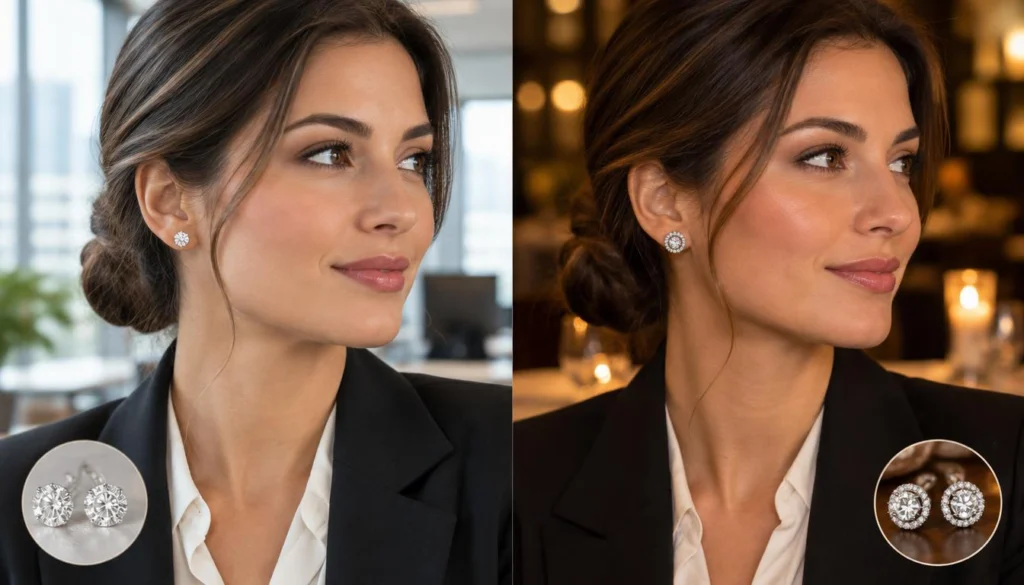
A classic round stud gives a tailored outfit a clean point of light, while a halo can bring more decoration to a simple evening dress. Choose the design that feels at home with the wearer’s usual clothes and preferred level of detail, not one based on gender labels.
Let personal taste and everyday clothing guide the design, rather than treating either style as reserved for a particular wearer.
Both designs can suit diamond stud earrings for men and diamond stud earrings for women. If you are buying real diamond stud earrings for men, consider the same practical questions you would for any wearer: how prominent should the studs look, and will they feel comfortable through a full day?
Classic round studs for a clean, versatile look
The classic round style puts one center stone in focus, with no surrounding row of diamonds to add visual detail. Its simple outline pairs easily with casual clothes, workwear, and formal outfits. A lower-profile setting can sit closer to the ear and feel less likely to catch on a collar or scarf. This shape works well when the wearer wants the diamond to stand on its own.
Halo studs for a more decorative profile
A halo surrounds the center stone with smaller stones. Those extra diamonds create a more ornate face-up look and can make the design appear larger from the front. The setting may also have more height or detail, so think about whether it will sit comfortably on the wearer’s ear. Ear size, clothing, and personal taste all help determine which profile looks balanced. Once the visual style feels right, consider what scale and weight will remain comfortable.
What Carat Size Works for Your Ears?
A pair labeled 1 carat does not necessarily contain a 1-carat stone in each ear: the label may refer to the combined weight of both diamonds. Total carat weight (TCW) is the combined weight of the diamonds in a pair of earrings. For an equal pair totaling 1 carat, each stud weighs 0.5 carat.
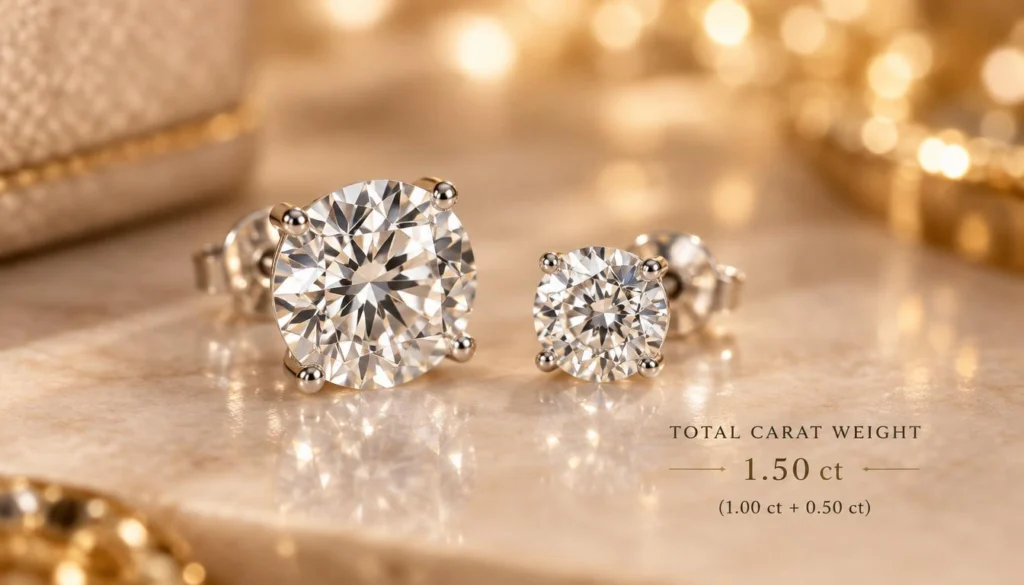
Look for the per-stud weight as well as the pair total, so you know what will sit on each ear. Equal stones are common, but the listing should state the weights clearly. These examples show how the numbers translate when both studs weigh the same:
| Pair total carat weight | Carat weight per stud | General visual impression |
|---|---|---|
| 0.5 carat | 0.25 carat | Subtle |
| 1 carat | 0.5 carat | Noticeable |
| 2 carats | 1 carat | Bold |
These descriptions are starting points, not fixed rules. Cut, setting, ear size, and personal preference all change how a given carat size looks. A pair of 1-carat diamond stud earrings has two 0.5-carat stones when the weights are equal; a pair of 2-carat diamond stud earrings has two 1-carat stones on the same basis.
Two-carat studs are not automatically too large, and no single size is inherently tacky. A bold pair can look balanced on one wearer and feel cumbersome to another; proportion and context matter more than a universal cutoff. Choose a scale that feels comfortable in motion as well as in a mirror. With a practical size in mind, you can assess the quality and materials that shape the sparkle.
What Do Cut, Color, Clarity, and Metal Change?
Two similarly sized stones can look different because diamond cut and setting affect how light returns to the eye and how much of the stone is visible. Cut and proportions have a strong effect on sparkle, while the setting metal can change the overall impression of color.
Cut and proportions shape the sparkle
Cut describes how well a diamond’s facets and proportions handle light, not simply its outline. A well-proportioned round brilliant can return light brightly; a poorly proportioned stone may appear less lively, even at a similar size. The setting also matters: prongs expose more of the stone, while a bezel surrounds its edge with metal and gives a more defined border. Check the face-up appearance, not just a short label.
Color and clarity affect the face-up appearance
Color and clarity grades describe features assessed under grading conditions, but small mounted stones can look different to the unaided eye. In a stud, the setting and the wearer’s viewing distance affect how easy it is to notice a tint or inclusion. White gold is one option for diamond stud earrings in white gold, while yellow gold gives a warmer contrast. Metal tone can influence how diamond color is perceived, so compare the combination rather than each detail alone.
| Metal | Appearance | Care consideration |
|---|---|---|
| White gold | Bright white | Rhodium plating may need refreshing over time |
| Yellow gold | Warm yellow | Does not need rhodium plating to create a white finish |
| Platinum | Naturally white | Can develop a patina with wear |
White gold gets its color from its alloy and is commonly rhodium-plated. Yellow gold keeps its warm gold tone, while platinum is naturally white and can develop a patina through wear. Each choice has a different look and upkeep. Once you know which features matter most, you can see how they shape the budget.
How Much Do Diamond Stud Earrings Cost?
In the United States, natural diamond stud pairs often range from about $500 to $10,000 or more, with the specifications making a substantial difference. Treat that broad range as a general guide, not a quote for a particular pair. Total carat weight, cut, color, clarity, metal, and seller all affect diamond pricing.
Read the weight carefully: a listing may state the total carat weight for both studs, while each stone has its own individual weight. The total does not tell you by itself how large either diamond will look, and it does not describe the rest of the pair’s quality or construction.
Two pairs that look similar at a glance can still have different prices. Differences in diamond quality, whether the stones are natural diamonds or lab-grown diamonds, setting materials, and seller all contribute. Even the same metal can be used in settings with different designs and levels of detail. Compare full specifications rather than relying on a product name or a photograph alone.
A budget is more useful when you decide which features matter most. You might prioritize a particular stone origin, a certain setting metal, or a well-documented grading report, then compare pairs that meet those preferences. A lower listed price does not show whether the diamonds’ origin and weight are stated clearly. After you set a comfortable spending limit, check what kind of diamond and seller the purchase includes.
How Can You Verify a Diamond and Choose a Seller?
“Real” describes the diamond material, but does not identify its origin: natural diamonds form in the earth, and lab-grown diamonds are created in a laboratory. If you specifically want a mined stone, the listing should identify it as a natural diamond.
Natural and lab-grown diamonds are both diamonds, but they have different origins. A clear listing for real diamond stud earrings should state the stone origin, weight, grading information, and setting materials. Review those details together so a pair’s description matches what you intend to buy.
Natural and lab-grown diamonds have different origins
Origin is a choice, not a measure of whether a stone is a diamond. Decide which kind you want, then check that the product description uses the specific term rather than leaving you to infer it from a photograph or a broad label.
Check the documentation and return terms
Use these checks before placing an order, whether you are shopping online or in person:
- Confirm whether the diamonds are natural or lab-grown.
- Confirm whether carat weight is per stone or for the pair.
- Review the grading documentation and identify its issuer.
- Check the metal and setting details.
- Read the return and warranty terms before purchase.
The best place to buy diamonds is a seller that provides transparent specifications, credible documentation, and clear policies. A well-presented display is not a substitute for terms you can read and understand. Online, look for complete product details and return conditions; in person, ask to review the same information before deciding. Once the purchase checks are clear, a few simple care habits can help protect the studs in regular use.
How Should You Wear and Care for Diamond Studs?
Discovering a loose backing while you are already at the door is a small but avoidable frustration. Secure, comfortable earring backs matter for daily wear, and the right backing should suit the wearer’s routine and comfort. Do not rely on a backing that feels loose or irritating during a normal day.
Choose backs that feel secure and comfortable, then check them periodically rather than waiting for a stud to loosen.
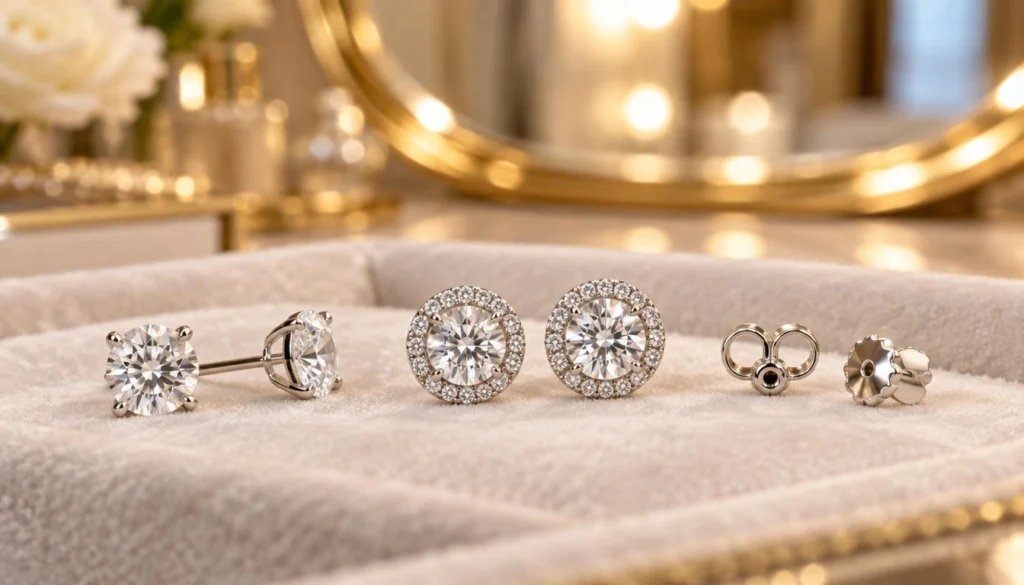
Some wearers prefer a simple backing, while others value a design that feels more secure. Whichever type you choose, make sure it is easy for the wearer to fasten and remove. Jewelry care is gentler when you keep products and rough handling away from the stones and settings.
- Remove the earrings before applying lotions or hair products.
- Clean gently with mild soap, warm water, and a soft brush.
- Rinse and dry fully over a closed drain or bowl.
- Store pairs separately, and check settings and backs periodically.
A loose stone or damaged setting is not a routine cleaning issue. Have a qualified jeweler inspect it instead of trying to adjust the setting yourself. These small checks help you wear a pair with confidence; the final choice comes down to the look you want and the specifications you can confirm.
Conclusion
For daily wear, choose a design that feels comfortable and understated; for a more dressed-up effect, choose the visual detail you enjoy wearing. The right pair balances preferred style, comfortable scale, and clearly documented specifications. You do not need to settle every preference at once: start with the design and weight that feel right, then compare the details that support your choice.
As a practical next step, select a small number of pairs with comparable specifications and review each seller’s documentation and policies side by side before choosing.
Explore more in our diamond stud earrings overview covering this pillar.
Related reading: luxury jewelry · engagement ring styles · tennis necklace.
How we research: EliteSoda desk-researches brand sites, auction houses, authorized dealers, and established marketplaces such as Chrono24 and major hotel/resort directories. We do not invent lab tests, prices, or quotes.
Frequently Asked Questions
What is the price of real diamond stud earrings?
Natural diamond stud pairs in the United States often range from about u0026#036;500 to u0026#036;10,000 or more. The total carat weight, cut, color, clarity, metal, and seller can move the price substantially. Check whether the listed weight covers both studs or each stone, since that difference changes what you are comparing.
Are diamond stud earrings still popular?
Yes, diamond studs remain a classic, versatile jewelry choice. Their enduring appeal comes from a simple format that can suit casual clothes, workwear, and formal occasions. Preferences do change in details such as stone size, backing, metal, and setting profile, so a popular style is not automatically the best fit for every wearer.
Are 2 carat studs too big?
Two-carat studs are not automatically too big, but check whether 2 carats means the pair’s combined weight or 2 carats in each ear. A pair totaling 2 carats has two 1-carat stones when they are equal. Ear size, comfort, and setting profile all affect how bold the studs look and feel.
What size diamond looks tacky?
No carat size is inherently tacky. Proportion, setting, the wearer’s taste, and the occasion matter more than a universal cutoff. A larger stone can look polished when the setting suits the wearer and the pair feels comfortable; a smaller one can still feel too prominent if its design does not match the wearer’s style.
What is the average cost of a 2 carat diamond?
A 2-carat diamond can mean one loose stone or a pair of studs totaling 2 carats, so clarify which you mean before comparing prices. Natural diamond stud pairs often range from about u0026#036;500 to u0026#036;10,000 or more, with wide variation. Cut, color, and clarity affect the price, and a single 2-carat stone is a different purchase from two 1-carat studs.
What is the most popular diamond cut?
Round brilliant is the most commonly favored diamond cut. “Round” describes the stone’s shape, while “brilliant” refers to a facet arrangement designed to return light. Cut quality and proportions affect sparkle, and the cut is separate from the earring’s setting style. A round diamond, for example, can sit in a simple prong setting or within a halo.
Are lab diamonds worth the money?
Lab-grown diamonds can be worth the money if you prefer their origin and their typically lower purchase price compared with natural stones of comparable specifications. Natural diamonds may better suit buyers who specifically value a mined origin. Consider what matters most to you, including origin, appearance, documentation, and budget, rather than treating either option as the right choice for everyone.
What is the best place to buy diamonds?
The best place to buy diamonds is a seller that clearly states stone origin, carat weight, grading information, and setting materials, then backs those details with credible documentation. Look for readable return terms and warranty policies, whether you shop online or in person. Compare the actual specifications and policies instead of choosing by retailer name or product photos alone.
Sources and further reading
Prices, availability and specifications change; we check brand and retailer pages before each update. See our editorial standards.