Elite Soda is reader-supported. When you buy through links on our site, we may earn an affiliate commission at no extra cost to you. Read our affiliate disclosure.
This article may contain affiliate links. See our Affiliate Disclosure. For the wider category, see our watches & jewelry guide.
A practical choice starts with the look you want and how often you expect to wear it. A tennis necklace can feel understated or make a more noticeable statement, depending on its stones, setting, and metal. Total carat weight (TCW) is the combined weight of all diamonds or gemstones in a piece. That figure is one useful point of comparison, but it does not describe every detail that affects appearance or value.
Diamond and gemstone options, precious-metal settings, fit, and construction all shape the decision. The right balance depends on your personal style, routine, and budget, whether you are shopping for yourself or gift shopping. A considered choice should suit the wearer and the occasions when the piece is likely to come out of its box. The first decision is the overall purpose, followed by the stones and settings available.
Key Takeaways
- Decide how often the piece will be worn.
- Compare stones, setting, and metal together.
- Use TCW as one comparison point, not the whole story.
- Choose a fit suited to the intended wearer.
- Set a budget before comparing specific pieces.
How to Choose a Tennis Necklace for Your Style and Budget
A diamond design gives a continuous, coordinated sparkle, while colored stones add a more individual accent. Choose by effect as well as by stone name: the same row of stones can look subtle or vivid depending on color, size, and setting.
Do not choose only by stone size; check that each stone is set securely and evenly. A larger-looking stone does not make a piece a better choice if the spacing is irregular or the settings feel loose. Ask to see the necklace laid flat, where differences in alignment are easier to notice.
Compare stone size alongside security and even spacing, not on its own.
Diamond or gemstone: compare the visual effect
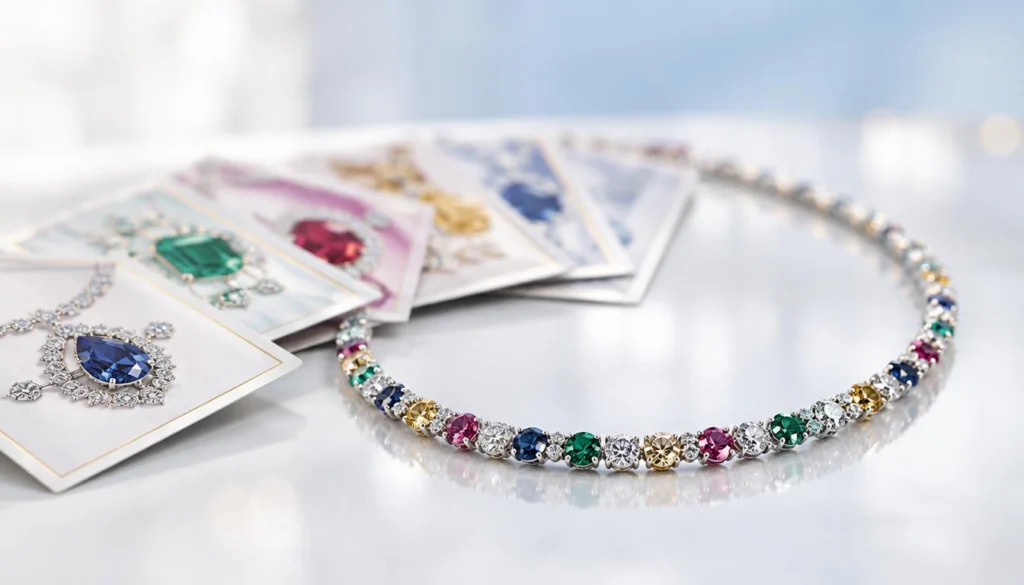
Diamond styles offer a consistent, bright line that can work as a discreet accent or a more prominent focal point. Gemstone styles introduce color and can make the design feel more personal. Mixed-stone designs combine both approaches, using colored stones as accents or alternating them with diamonds.
| Style | Visual effect | A buying check |
|---|---|---|
| Diamond | Continuous, coordinated sparkle | Check stone alignment and setting security |
| Colored gemstone | Distinct color and individual character | Check that color looks even across the row |
| Mixed-stone | Contrasting color and brightness | Check the pattern repeats evenly |
Gold and other precious-metal settings
Gold can make the same stones read warmer or cooler, depending on its color. A tennis necklace in gold may use yellow, white, or rose gold, and a women’s tennis necklace in gold can be compared by karat, color, and setting construction. A women’s tennis necklace, including one in gold, is best judged by how the metal and setting work together, not by color alone. Platinum offers another precious-metal option with a different appearance and feel.
Which setting details affect everyday wear?
Look closely at how the stones are held, how flexible the links are, and whether the clasp closes cleanly. A well-finished setting should not have sharp edges or gaps that catch on fabric. These details matter whether you prefer classic diamond styles or more expressive gemstone styles. Hand off from appearance and construction to the question of how the necklace should sit on the wearer.
What Length and Fit Should You Choose?
Two necklaces of the same length can sit differently on different necks, so use measurements as a starting point rather than a guarantee. Check the actual drop against the wearer’s neck and the intended position. A comfortable fit should lie securely without feeling tight or hanging lower than you want.
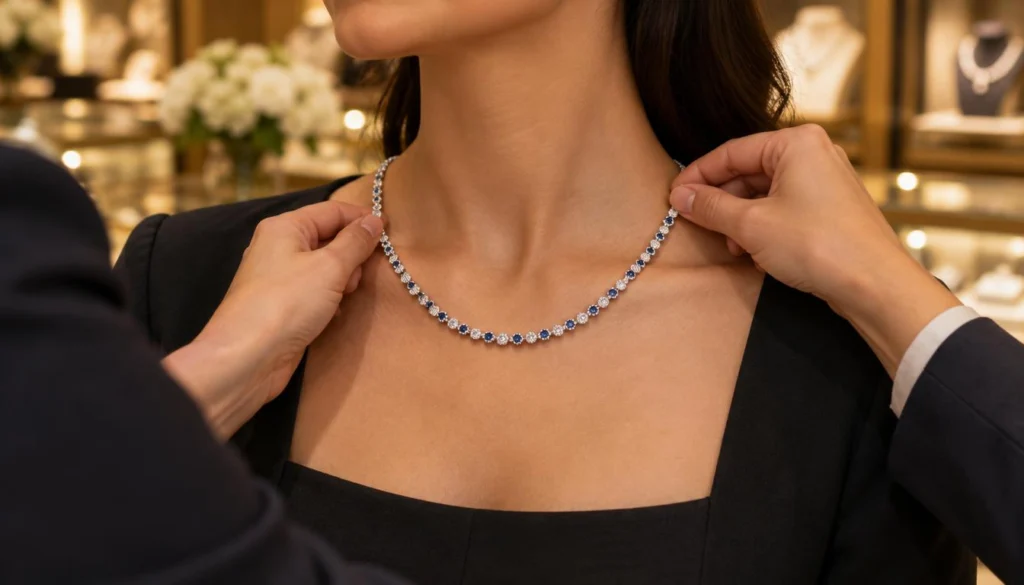
These placements are approximate, since neck size and necklace design affect where the stones fall.
| Length | Typical placement | Fit consideration |
|---|---|---|
| 16 inches | Near the base of the neck, approximately | May feel close-fitting on a larger neck |
| 18 inches | Near the collarbone, approximately | Check the intended drop at the front |
| 20 inches | Below the collarbone, approximately | Confirm it does not hang too low |
Measure for the intended fit
If you own a necklace that sits comfortably, lay it flat and measure its length from end to end, including the clasp. To check a different drop, place a flexible measuring tape around the neck and note where the front should fall. Compare that measurement with the necklace’s stated length, allowing for the curve of the neck rather than assuming a flat measurement will translate exactly.
Check that the clasp closes fully and that the necklace does not pull when you turn your head. A secure clasp should stay fastened without pinching or restricting movement.
Choosing a tennis necklace for kids
For a kids’ tennis necklace, measure the child rather than assuming an adult length will work. Consider when the piece will be worn, such as for a special event or occasional use, and make sure it does not sit so loosely that it catches easily. With the fit established, move on to the details that affect what the piece may be worth.
What Determines a Tennis Necklace’s Value?
Two pieces with a similar look can have different prices because their materials and construction differ. Compare the complete piece, not a single feature: price depends on stone type and quality, total carat weight, metal, and construction. The original purchase price and resale value are different measures.
Diamond quality can affect the price, as can the quality of colored stones. TCW helps describe the combined stone weight, but two necklaces with the same TCW may differ in stone quality, metal, and workmanship. Metal purity is stated in karat for gold, while construction includes details such as how the stones are secured and how the clasp is finished.
A stainless steel tennis necklace is another metal option to compare by its construction and suitability for the intended use; the material alone does not guarantee a particular value. Resale value can depend on condition and buyer demand, so the amount paid at purchase should not be treated as a promise of what a future buyer will pay.
- Stone type and total carat weight
- Stone quality
- Metal and its purity
- Construction and condition
Use these checks to keep a purchase budget grounded in the features that matter to you. Once you understand the value factors, shift to how the necklace can work with clothes and other jewelry.
How Can You Style a Tennis Necklace?
A single row of stones can be the focal point, or it can sit among simpler chains for a more layered look. Keep the combination intentional: contrast can add interest, while too many competing details can make an outfit feel crowded.
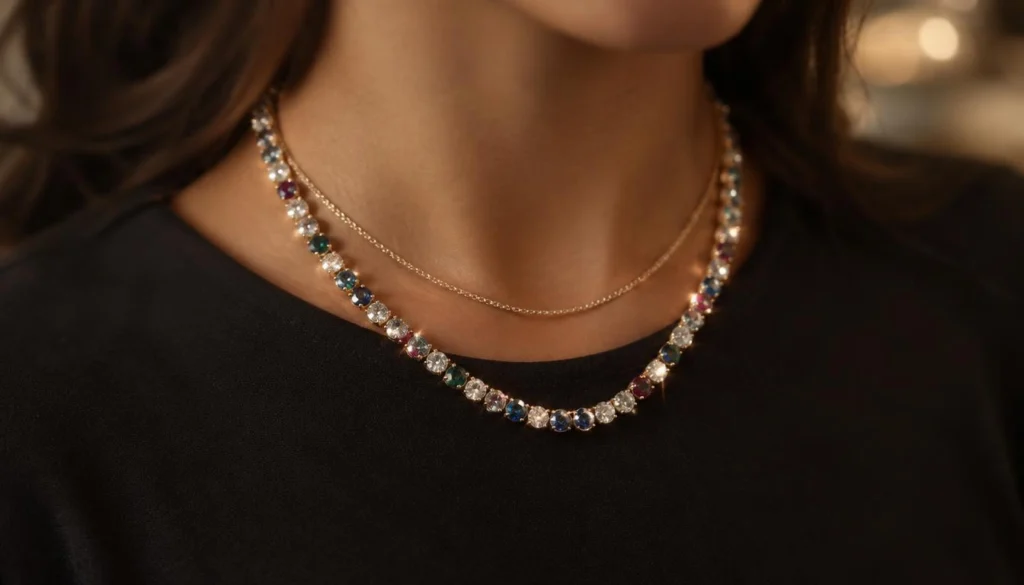
A layered tennis necklace works best when the other pieces differ in length, scale, or texture. Try a fine chain above or below it, or pair it with a simple chain that has a different surface. Check that the pieces do not tangle as you move and that another pendant or bold chain does not compete for attention.
Build a layered tennis necklace look
For everyday clothing, a single strand can add a polished detail to a plain shirt or sweater. To layer it, start with just one additional chain and see whether the lengths separate clearly. A delicate chain can soften the row of stones; a heavier chain creates a more noticeable contrast. The right balance is personal, not a fixed styling formula.
Match the necklace to the occasion
For a dressier occasion, wear the necklace on its own with a simple neckline, or add one understated chain if you want more dimension. With casual clothes, letting the stones provide the main detail can keep the look relaxed. Personal preference matters more than a strict rule about what belongs at a particular event.
A high neckline or a heavily embellished outfit may already provide enough visual detail without a necklace. In those cases, leaving the neck bare can make the rest of the outfit feel more considered. After settling on how you want to wear it, move to protecting the piece during regular wear and storage.
How Do You Care for and Wear It?
A quick inspection before wearing can catch a loose stone or a clasp that is not fully closed. Check before each wear, especially if the necklace has been stored for a while. Cleaning methods should suit the necklace’s stones and metal.
Do not assume every gemstone can be cleaned the same way. A method suitable for one stone or metal may be unsuitable for another, particularly if a stone has been treated. Use a gentle approach only when you know it is appropriate; when materials or treatments are uncertain, check care guidance from a qualified jeweler. Avoid harsh substances that could affect the stones, metal, or finish.
Match the cleaning method to the materials, and pause if you are unsure what the stones have been treated with.
Regular jewelry cleaning does not need to mean frequent or aggressive polishing. After wearing the piece, use a soft cloth if that is suitable for its materials, and put it away where it will not rub against other jewelry. Good storage habits help reduce both scratches and tangles, while a quick clasp check can catch a problem before the necklace is worn.
- Inspect the clasp before wearing.
- Check for loose stones.
- Store the necklace separately to reduce scratching and tangling.
- Remove it for activities where it could snag, be struck, or contact harsh substances.
Careful handling protects comfort as well as the necklace’s condition, making it easier to enjoy the piece over time. The final buying decision can now come down to a few practical criteria.
Conclusion
A good choice is the one that fits comfortably, suits the wearer’s style, and makes sense for the intended use. Prioritize a design that feels right to wear and works with the wearer’s routine, rather than focusing on one specification in isolation.
For a concrete next step, measure a necklace that already fits, set a spending limit, and compare candidate pieces against those criteria. That gives you a practical basis for weighing options and choosing the one that suits the wearer. Use those criteria whenever you compare designs.
Explore more in our tennis necklace overview covering this pillar.
Related reading: luxury jewelry · engagement ring styles · 3 carat diamond ring.
How we research: EliteSoda desk-researches brand sites, auction houses, authorized dealers, and established marketplaces such as Chrono24 and major hotel/resort directories. We do not invent lab tests, prices, or quotes.
By the numbers: Diamond weight is measured in carats, and one carat equals 200 milligrams (carat (mass) reference). A tennis necklace described as 10 carats total weight might use 100 to 150 stones of 0.07 to 0.10 carat each. GIA color grades run from D to Z, and closely matched color across every stone matters more than the grade of any single one.
Frequently Asked Questions
How do tennis necklaces fit?
Tennis necklaces fit according to their length and the wearer’s neck size, so standard measurements are only approximate placement references. A 16-inch necklace typically sits near the base of the neck, an 18-inch one near the collarbone, and a 20-inch one below it. The design and neck size can change those positions, so compare the intended drop before choosing.
What is the necklace everyone is wearing?
There is no single necklace that everyone wears. A tennis necklace is a recognizable style with a continuous line of stones, often diamonds, but its popularity does not make it a universal choice or prove it is the current trend. You can wear the style alone or with simpler chains, depending on your taste and the occasion.
How much is a tennis necklace worth?
There is no single value for a tennis necklace; its price depends on its stones, total carat weight, metal, and construction. Purchase price and resale value are separate measures. Resale may also depend on the necklace’s condition and buyer demand, so the original amount paid does not establish what a future buyer will offer.
Why is a tennis necklace called a tennis necklace?
The commonly told origin story links the name to tennis player Chris Evert, whose diamond bracelet came loose during a match. The story helped popularize the association between tennis and a line of individually set stones. “Tennis necklace” is a familiar jewelry style name, not a technical term that describes one required stone, metal, or construction method.
Is a tennis necklace classy?
Yes, a tennis necklace can suit both formal and everyday outfits. Whether it feels understated or prominent depends on the setting, scale, and clothes around it. A fine, simple design can be a subtle accent, while a larger or more elaborate piece may read as a focal point. Personal taste matters more than a fixed rule about elegance.
What is the 2:1:1 rule in jewelry?
The term “2:1:1 rule” does not have one universally standardized meaning in jewelry. Its intended ratio can depend on the styling context, such as balancing different pieces or proportions. Before applying a specific formula, identify which context the rule refers to; otherwise, the numbers may not give useful guidance for your outfit or jewelry combination.
What is the hottest jewelry right now?
Jewelry trends change, and there is no single item that suits everyone. A design may be popular in one setting and less appealing in another, while personal taste and intended use remain useful guides. Choose a piece you like wearing rather than treating a claim about the “hottest” item as a lasting or universal fact.
When to not wear a necklace?
Remove a necklace when it could snag, be struck, or interfere with an activity. That can include exercise, hands-on work, or situations where a chain may catch on equipment or clothing. For styling, a high neckline or heavily embellished outfit may already provide enough visual detail without a necklace, so wearing one is optional.
Sources and further reading
Prices, availability and specifications change; we check brand and retailer pages before each update. See our editorial standards.