Elite Soda is reader-supported. When you buy through links on our site, we may earn an affiliate commission at no extra cost to you. Read our affiliate disclosure.
This article may contain affiliate links. See our Affiliate Disclosure. For the wider category, see our watches & jewelry guide.
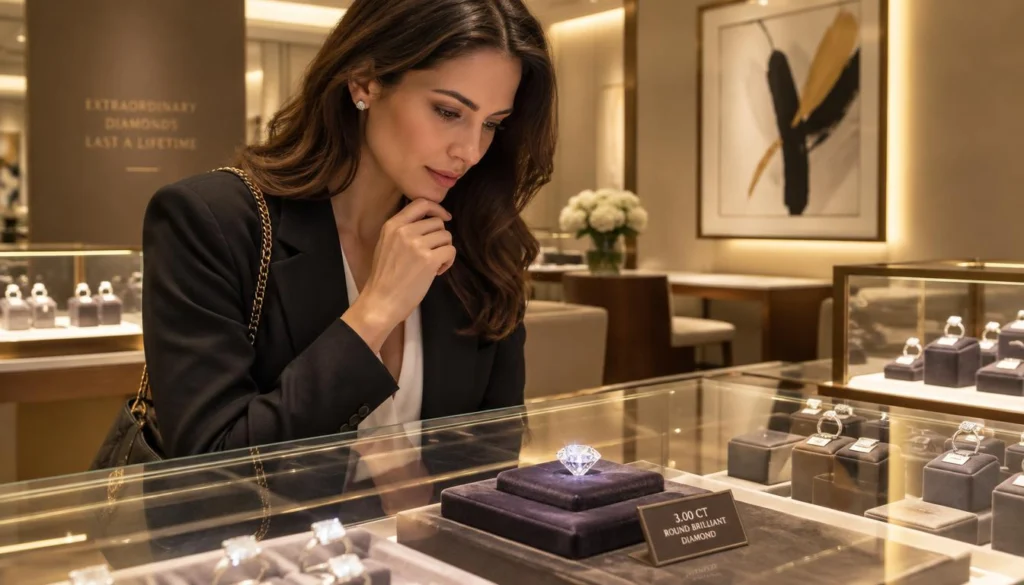
A 3-carat stone can make a striking ring, but its weight alone does not determine its price or how large a 3 carat diamond ring looks. Carat weight measures mass; face-up size means the visible dimensions of a stone when viewed from above. Engagement planning is easier when you treat those as separate considerations and set a jewelry budget around the whole ring, not the number on the carat label.
The stone’s origin, cut, color, clarity, and diamond shape all affect its appearance and cost. The setting also influences the finished ring’s look and price, so two stones with the same carat weight can lead to very different purchases. A clear set of priorities can help you compare options without assuming the heaviest or highest-graded stone is automatically the best fit.
Key Takeaways
- Carat weight measures a stone’s mass, not its visible dimensions.
- Origin and quality grades can change the cost substantially.
- Diamond shape affects how large a stone looks from above.
- The setting adds to the final ring cost.
- Your budget should account for the complete ring.
Natural diamonds, lab-grown diamonds, and other stones occupy very different price ranges, so begin by comparing those broad differences.
How Much Does a 3 Carat Diamond Ring Cost?
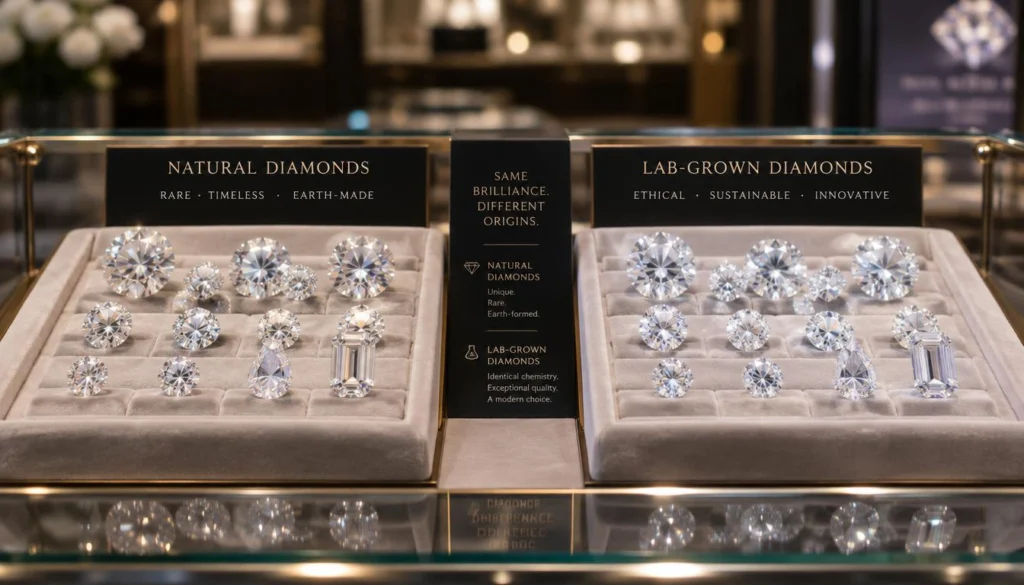
A 3-carat ring can cost a few thousand dollars or well into six figures, depending mainly on the stone and its quality. As a broad starting point, a natural diamond ring typically costs about $20,000 to $100,000 or more, while a 3 carat diamond ring with a lab-grown diamond typically costs about $2,000 to $10,000 or more. These are broad estimates, not guaranteed quotes, and the setting and metal add to the ring’s cost.
A 3-carat ring’s total cost can range from a few thousand dollars to well into six figures, with the stone and its quality driving much of the difference.
Moissanite is a different gemstone, not a diamond, and a 3-carat moissanite ring typically costs about $500 to $2,000. The figures below describe typical prices for a 3-carat stone or equivalent. Actual prices vary with quality, shape, and setting, so compare like with like when you assess a quote.
| Stone type | Typical price for a 3-carat stone or equivalent | Material and origin |
|---|---|---|
| Natural diamond | About $20,000-$100,000 or more | Mined diamond |
| Lab-grown diamond | About $2,000-$10,000 or more | Diamond grown above ground |
| Moissanite | About $500-$2,000 | A different gemstone |
Natural and lab-grown diamond prices
A natural diamond is mined from the earth; a lab-grown diamond is grown above ground. Both are diamonds, but their different origins are reflected in the typical price ranges. If you are comparing a 3 carat diamond ring price, check that each option is close in carat weight and quality before judging the cost difference. Moissanite offers another look and price point, but it is not a diamond.
What changes the total price?
Stone origin, cut, color, clarity, and shape all affect the total. The ring setting and metal contribute to the final cost as well, and a more elaborate design can add expense beyond the center stone. Make sure a listed price refers to the complete ring or to the stone alone; those are not interchangeable totals. The broad price bands are a starting point, not a substitute for comparing the actual stones and rings you are considering.
With the broad price bands in view, the next step is to understand the quality grades that most affect a diamond’s value.
How Do Cut, Color, and Clarity Affect Value?
Two diamonds with the same carat weight can look noticeably different because their cut, color, and clarity are not the same. The combined appearance matters most: cut quality affects how effectively a stone reflects light, while color grade and clarity grade describe separate characteristics of the diamond. A higher grade is not automatically the best value for every buyer.
Cut quality influences a diamond’s brightness and the way light moves through it. A well-cut stone can appear lively, while a poorly cut stone may look less bright even if its carat weight is identical to another diamond. Grading terms give you a way to compare characteristics, but they do not replace looking at the actual stone. A number on a report cannot tell you on its own which diamond you will prefer.
Color grade describes how much color is visible in a diamond, while clarity grade describes internal features and surface characteristics. Those grades are not measures of the same thing, so it helps to consider them separately. Some differences may be hard to notice without close inspection; other details may stand out to you when you view the stone. Your choice can reflect what you can see and what matters to you, rather than a goal of maximizing every grade.
When you compare stones, avoid making one grade your only filter. A diamond with a top grade in one category may not look more appealing to you than another stone with a different balance of qualities. View the whole stone and consider how its brightness, visible color, and inclusions work together. That approach can keep you focused on appearance and value instead of treating a grading label as a promise of personal preference.
Use this checklist to make a fair comparison:
- Compare stones in person or in consistent images.
- Inspect the grading report for each diamond.
- Look for inclusions visible to the unaided eye.
- Compare how the stones look under more than one lighting condition.
Consistent images help you compare proportions and visible details without confusing changes in lighting or camera angle for differences in the diamonds. If you view stones in person, look at them under more than one light source. An inclusion that is easy to spot without magnification may matter more to your enjoyment than a grade difference that you cannot see during ordinary viewing.
Use the report to understand how a diamond was graded, then use your eyes to decide whether its appearance suits you. The best balance is the one that meets your budget and looks appealing in the conditions where you expect to wear it. With those quality trade-offs clear, consider how diamond shape changes a stone’s look on the hand.
Which Diamond Shape Looks Largest on the Hand?
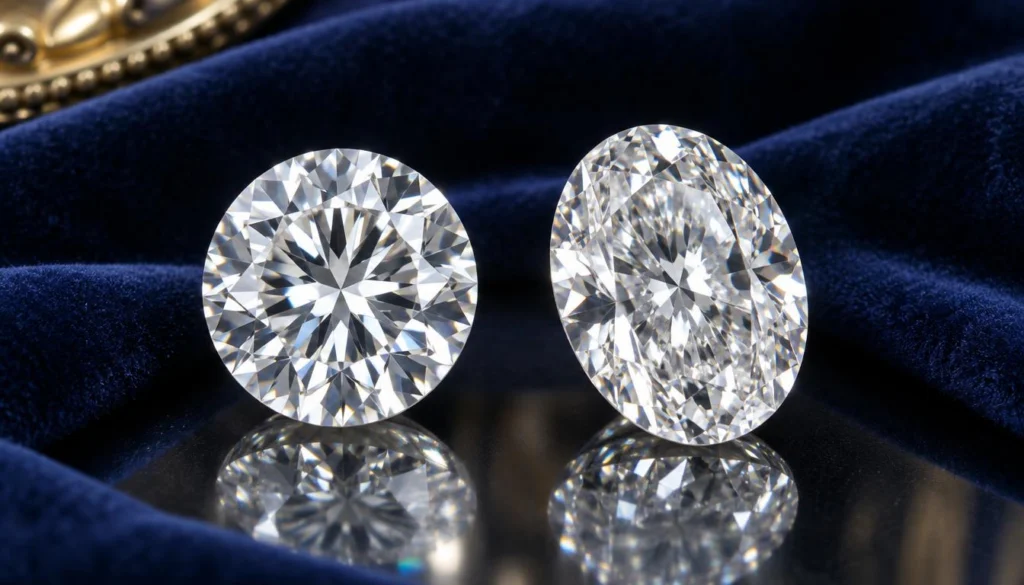
A round brilliant 3-carat diamond is typically about 9.2-9.3 mm across, while an elongated shape can spread its visual presence differently. Carat weight measures mass, not diameter, and the dimensions of a stone vary by diamond shape and cut proportions. Ovals and marquise cuts can appear larger face-up than a round stone of the same weight.
Face-up size is the visible dimensions of a stone when viewed from above. A round brilliant’s measurements are usually close across its width, while an elongated stone stretches farther along one axis. That difference can make the stone’s outline occupy more of your finger from certain angles, but it does not mean every elongated stone will look larger in every setting or on every hand.
Round and elongated shapes
A round brilliant has a balanced outline and a familiar, circular look. An oval cut keeps a soft, curved outline but extends it lengthwise, giving the stone a more elongated appearance. A marquise cut narrows to points at both ends, creating a sharper, more dramatic silhouette. These outlines change how a stone fills the space across your finger, even when the carat weight is the same.
A 3 carat diamond ring in an oval cut may give you a longer face-up outline than a round stone of equal weight. A 3 carat diamond ring in a marquise cut also has an elongated outline, with pointed ends that make its shape especially distinct. The way either shape looks on your hand depends on its dimensions and proportions, as well as your personal taste.
Comparing oval, princess, and marquise cuts
A princess cut is typically square or rectangular, with a crisp, angular outline. A 3 carat diamond ring in a princess cut gives you that geometric look rather than the curved outline of an oval or the tapered points of a marquise. The face-up dimensions of these shapes are not directly interchangeable: each distributes its weight differently across length and width.
Compare the actual measurements and view the stone on a hand when you can. A longer outline may appeal if you want the stone to extend along your finger; a square outline may suit you if you prefer a more even, structured look. Neither proportion is universally more flattering. Your hand shape, ring size, and preferred style all affect how the center stone reads when worn.
Once you have a preferred shape, consider how the setting and metal affect its protection, style, and overall cost.
Which Setting and Metal Should You Choose?
A large center stone needs a setting that feels comfortable and holds it securely, not just one that looks impressive in a display case. Security and comfort come first for a ring you plan to wear often. A sound setting protects the stone while keeping the ring comfortable for regular wear.
Choose a setting that holds the center stone securely and feels comfortable in daily wear, not one that relies on ornament to make an impression.
Prongs hold the stone above the band and leave much of it visible, while a bezel surrounds the stone’s edge with a rim of metal. A halo adds a border of smaller stones around the center, and a three-stone design places additional stones beside it. Each style creates a different balance of visibility, coverage, and detail. The best choice depends on how you want the center stone to look and how much protection you want around its edges.
Setting styles and stone protection
For a 3 carat diamond ring for an engagement, think about how the ring will work beyond the proposal. A setting with more coverage can help shield parts of the stone, while a more open design leaves more of it exposed. Inspect the points where the setting holds the diamond and consider whether its height or edges might catch on clothing during everyday tasks. A secure design does not need extra ornament to feel special.
Try the ring on if possible, or compare its dimensions with a ring you already wear. Check whether the band feels comfortable between your fingers and whether the center stone sits at a height you can manage. These practical details matter when a large stone is part of a ring you expect to wear regularly.
Gold and other metal choices
Gold is one option alongside other precious metals. A 3 carat diamond ring in gold can be made in different gold colors and setting styles, so the choice is not limited to one appearance. The metal color can change the overall look of the ring, while the setting design affects how the center stone is held. Setting design and metal also affect the final cost; compare complete rings rather than focusing on the stone alone.
Use this buyer checklist before settling on a design:
- Confirm that the stone is held securely.
- Check that the setting feels comfortable.
- Consider how the design will work with regular wear.
- Compare the metal color with the wearer’s usual jewelry.
Consider maintenance and daily habits as well as appearance. If you wear your hands hard at work or take your jewelry off for certain activities, choose a design that fits those routines. A lower-profile ring may feel easier to wear than a taller setting, while a more detailed design may better match your preferred style. Bring the shape, quality priorities, and setting preferences together for a confident final choice.
Conclusion
The right 3-carat ring is the one that fits your budget and priorities as well as your preferred look. Carat weight alone is not a complete measure of value: the stone’s appearance and the way the finished ring works for you matter too. Give yourself room to compare rather than choosing by a single grade or number.
Set a total budget, choose natural or lab-grown, then compare a small group of stones in your preferred shape and setting.
Explore more in our 3 carat diamond ring overview covering this pillar.
Related reading: luxury jewelry · engagement ring styles · tennis necklace.
How we research: EliteSoda desk-researches brand sites, auction houses, authorized dealers, and established marketplaces such as Chrono24 and major hotel/resort directories. We do not invent lab tests, prices, or quotes.
Frequently Asked Questions
Is a 3 carat diamond big?
Yes, a 3-carat diamond is a substantial stone. A round brilliant is typically about 9.2-9.3 mm across, though shape changes its face-up dimensions. The stone’s proportions also affect how much length and width you see from above. If you are deciding whether the size feels right, compare the diamond on a hand rather than relying on carat weight alone.
How big a diamond will $10,000 buy?
As a broad rule of thumb, u0026#036;10,000 may buy about a 0.8-1.2-carat natural diamond or a lab-grown diamond weighing multiple carats. The exact size depends on shape, cut, color, and clarity, so carat weight is not the only factor in a price comparison. Compare the visible appearance and grading details of individual stones before deciding which option suits you.
What is the most popular diamond cut?
The round brilliant is the most popular engagement-ring choice. “Round” describes the diamond shape, while “brilliant” describes a cut style designed to return light through the stone. People often use “cut” to mean shape in everyday conversation, but the terms refer to different things. When comparing diamonds, check whether a description refers to the outline or the stone’s cut style.
What size diamond looks tacky?
No carat size is inherently tacky. Proportion, setting, personal taste, and comfort matter more than a universal size limit. A large stone can look balanced in a design that suits the wearer, while a smaller one can feel out of place if its style does not match their preferences. Choose a size the wearer enjoys seeing and feels comfortable wearing.
What is the 3 month ring rule?
The 3 month ring rule is a budgeting convention that suggests spending three months’ salary on an engagement ring. It is not a required spending rule or a measure of commitment. Your budget can reflect your own finances and priorities instead. Decide what you can comfortably spend on the complete ring, including the center stone, setting, and metal, without treating the convention as a target.
Sources and further reading
- GIA: the 4Cs of diamond quality
- FTC Jewelry Guides, 16 CFR Part 23 (eCFR)
- IIHS vehicle safety ratings
- US DOE/EPA fuel economy data
Prices, availability and specifications change; we check brand and retailer pages before each update. See our editorial standards.