Elite Soda is reader-supported. When you buy through links on our site, we may earn an affiliate commission at no extra cost to you. Read our affiliate disclosure.
This article may contain affiliate links. See our Affiliate Disclosure. For the wider category, see our watches & jewelry guide.
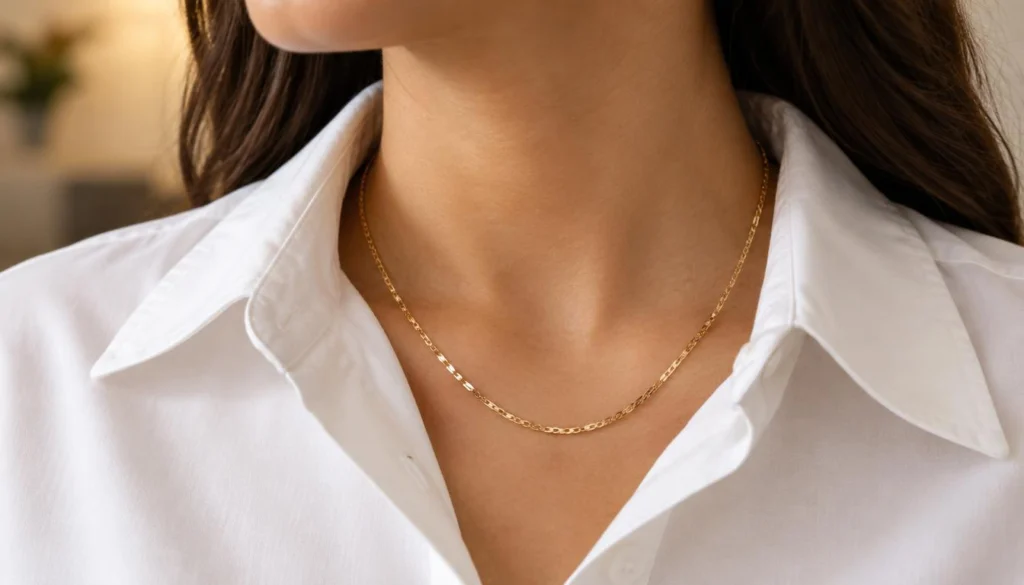
A fine 14k gold chain worn close to the neck can almost disappear beneath a collar, while a heavier chain can stand out over a shirt. For everyday styling, the difference is not just a matter of taste: fit, comfort, and intended use matter as much as appearance. You may want a subtle piece for daily wear, a chain that layers without tangling, or a dependable match for a pendant.
Your personal style can guide the choice, but so can the clothes you wear and how you plan to use the chain. A necklace meant to sit alone has a different job from one carrying a pendant, and a close-fitting length will feel different from a piece that moves across your chest. The comparison ahead will help you weigh materials, styles, fit, and purchase checks so you can choose with confidence. First, it helps to understand what the 14K mark means.
Key Takeaways
- Choose a chain for how you plan to wear it, not appearance alone.
- Match the length to your neckline and preferred placement.
- Check that a pendant fits the chain’s bail and weight.
- Compare chain weight and construction when assessing similar pieces.
- Read the item details and return terms before buying.
What Does a 14K Gold Chain Mean?
14K identifies the proportion of gold in the alloy. Karat is a measure of gold purity that states how many parts out of 24 are gold. In 14K jewelry, 14 of those 24 parts are gold, or about 58.3%, and the remaining portion consists of other metals.
Those alloy metals affect color and practical characteristics, such as how the metal looks and responds to wear. Solid gold describes the metal composition, while solid-link and hollow-link describe the interior of the chain links. A 14k solid gold chain is made of a 14K gold alloy throughout, but its links may still have either solid-link or hollow-link construction.
Solid gold describes the metal composition, while solid-link and hollow-link describe the interior of the chain links.
Gold-plated jewelry has a layer of gold over a different base metal. Gold-filled jewelry has a thicker bonded gold layer than plated jewelry, but it is not the same as a piece made throughout of a gold alloy. Read the description carefully so those terms do not blur together.
Yellow gold keeps a familiar warm tone, white gold offers a cooler look, and rose gold has a pinkish hue. These are color choices, not different karat measures. The balance of gold and alloy creates options in color and wear characteristics, while the chain’s link pattern gives each option its distinct look.
Which 14K Gold Chain Styles Suit Different Looks?
If the pendant should draw the eye, choose a chain that supports it without competing; if you plan to wear the chain alone, a more visible link pattern can carry the look. Let the focal point lead, then consider whether the chain’s texture and scale suit it.
How link patterns change the look
The link pattern changes how much a chain catches light and how prominent it appears against clothing. These common styles offer different visual effects and pendant pairings:
| Style | Link appearance | Typical pendant pairing |
|---|---|---|
| Cable | Oval links | Lightweight pendants |
| Curb | Close-set flat links | Bold pendants |
| Figaro | Alternating short and long links | Small pendants or solo wear |
| Rope | Twisted strands | Often worn alone or with a pendant suited to its textured look |
| Box | Square interlocking links | Slim pendants |
A 14K gold chain for a woman can suit delicate layering or a bolder standalone look; the best choice depends on the wearer’s preferences and how the chain will be styled. A rope chain’s textured surface, for example, may be enough on its own, while a simple cable pattern can leave a pendant in the foreground.
Matching a pendant or nameplate
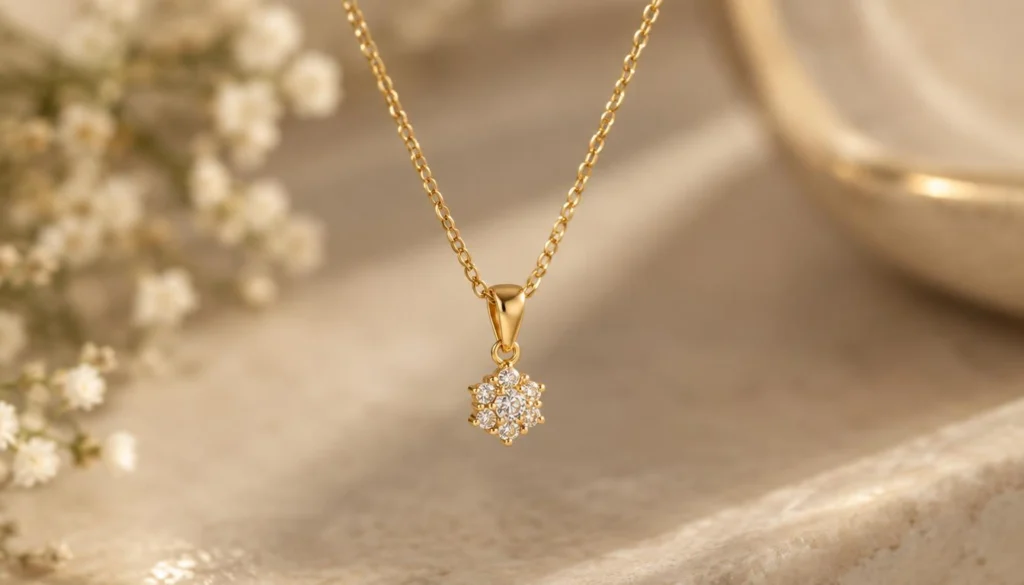
A 14k gold chain for a pendant should fit the pendant’s bail and support its weight. The bail is the loop through which the chain passes, so check its opening against the chain’s width rather than relying on appearance alone. A chain that looks delicate may not pass through a small bail, and a heavy pendant can pull uncomfortably on a very fine chain.
A Women’s 14K gold chain with pendant can be sold as a coordinated set, but the listed details should still make clear what is included. A 14K gold chain for a woman with a name is another personalized option; check whether both the nameplate and chain are described as 14K gold. Once the visual pairing works, length and weight determine how the piece sits and feels.
How Do Length and Weight Change the Fit?
The same chain can sit near one person’s collarbone and higher or lower on another, because body size, neck size, and the way the necklace is worn change its placement. Use length as a starting point, not a guarantee of where the chain will fall.
Choosing a length for the neckline and wearer
These approximate placements can help you compare lengths. Placement varies by wearer and neckline, so a chain may sit differently with a crew neck, open collar, or pendant.
| Length | Approximate placement | Common styling |
|---|---|---|
| 16 inches | Near the base of the neck | Close-fitting |
| 18 inches | Around the collarbone | Common everyday fit |
| 20 inches | Upper chest | A looser everyday fit |
| 22 inches | Chest | A longer look or room for a pendant |
A 14K gold chain for men is often chosen in longer lengths or wider profiles, but personal build and preferred fit matter more than gender conventions. A 14K solid gold chain at 22 inches is one option, not a universal standard. Try to picture the chain with the clothes you actually wear, rather than using a label as a substitute for fit.
- Measure a necklace that already fits.
- Consider the neckline and clothing you plan to wear.
- Account for pendant drop and bail size.
- Check whether the clasp or extender allows adjustment.
What chain weight tells you
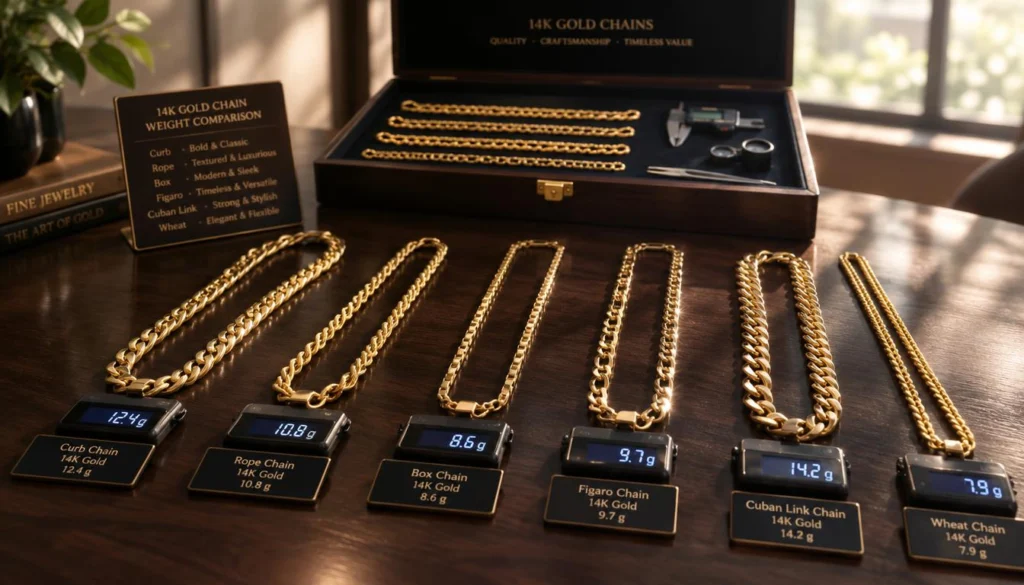
Chain weight is usually listed in grams, but that number alone does not tell you how durable a piece will be. Weight depends on length, width, link design, and solid-link or hollow-link construction. Gram weight is not enough by itself to compare durability because width and link construction also matter.
A heavier chain may contain more metal, but its design and construction still affect how it feels and handles everyday use. Compare weight alongside the width and link details instead of treating grams as a stand-alone quality score. Fit and construction also affect how much you pay, which makes those details useful when comparing prices.
What Should You Expect to Pay for a 14K Gold Chain?
The cost depends on both the amount of gold and the work and markup behind the finished chain. There is no single price for every 14K piece: chain weight and current gold-market price affect its metal component, while workmanship, design, and seller markup affect the retail figure.
Compare similar chains by their stated karat, gram weight, length, and construction before judging the quoted price. That comparison is more useful than assuming a lower price means better value or that two chains with the same length contain the same amount of gold.
What affects the retail price
The gold chain price reflects more than the metal. A detailed design or more involved workmanship can add to the retail price, as can the seller’s markup. Different lengths, widths, and link construction can also mean that two chains with a similar appearance use different amounts of metal. Check each item’s listed details before comparing it with another piece.
For a useful comparison, look at chains with similar design and construction, then compare their length and gram weight. The 14K gold chain price should be considered alongside what the finished item offers, not in isolation. A very low quote may reflect a lighter or differently constructed chain, so compare like with like.
How to think about metal value
Gold melt value estimates the metal component of a chain. The estimate uses the chain’s weight, karat purity, and the current gold price, but it is not the same as the retail price of a finished piece.
Retail pricing includes the work and design involved in making the chain, as well as the seller’s markup. Resale offers may be below retail and vary with the item and the buyer. Melt value is a reference point for metal content, not a promise of what a chain will sell for or what you will receive when reselling it.
When reviewing a quote, compare the stated karat, gram weight, length, and construction for similar designs. That gives you a clearer view of both the chain’s metal content and the finished product you are paying for. After evaluating value on paper, make sure the chain and its listing are accurately represented.
How Can You Check a Chain Before Buying?
A 14K stamp is useful, but it should not settle the question of authenticity by itself. Check the whole listing against the item, since a mark and a product description are only part of the picture.
A hallmark does not prove authenticity on its own; ask a qualified jeweler about jewelry authentication when the metal is uncertain. A jeweler can assess the piece using appropriate methods rather than relying on a listing photo or stamp alone.
A 14K stamp is useful, but it should not settle the question of authenticity by itself.
Signs of genuine 14K gold
Inspect the hallmark and compare it with the item description. A clear listing should explain the metal and the chain’s construction, rather than using “gold” as a loose description. When details conflict or remain unclear, a qualified jeweler can assess the jewelry in person.
Choosing a seller and checking the listing
The best website to buy real gold jewelry online is one that clearly identifies karat, weight, construction, seller identity, and return terms. Those details let you judge the specific item rather than relying on a retailer’s general reputation. Before you purchase, use this checklist:
- Inspect the karat mark and item description.
- Confirm whether the chain is solid gold, gold-filled, or plated.
- Compare the listed length and gram weight with the item details.
- Read the seller’s return and authenticity policies before purchase.
For a personalized 14K gold chain for a woman with a name, check that the listing identifies the metal of both the nameplate and the chain. A description that covers only one part leaves an important detail unclear. Review these checks against the specific item you are considering, then choose the chain whose details match the way you intend to wear it.
Conclusion
The best fit is the chain that suits your style and intended use while sitting comfortably at the length you prefer. Construction matters too: choose a piece appropriate to how often you plan to wear it, and consider how gently it will need to be handled.
Start by measuring a chain you already like, then compare its length and weight with the listing for the piece you are considering. Before buying, check the listed metal and weight, along with the seller’s return terms. Those details give you a practical basis for choosing a chain you can wear with confidence.
Explore more in our 14k gold chain overview covering this pillar.
Related reading: luxury jewelry · engagement ring styles · tennis necklace.
How we research: EliteSoda desk-researches brand sites, auction houses, authorized dealers, and established marketplaces such as Chrono24 and major hotel/resort directories. We do not invent lab tests, prices, or quotes.
How to choose a 14k gold chain?
Choose length by where you want the chain to sit: 18 inches lands at the collarbone, 20 inches just below it, and 22 to 24 inches suits pendants or layering over clothing. Pick a link style that matches daily wear. Rope and Cuban links are strong and hold their shape, while thin box and snake chains look refined but kink more easily. Check the 14k or 585 stamp, the clasp type, and whether the chain is solid or hollow, since hollow links are lighter and cheaper but dent more easily.
If you plan to match pieces, buy a 14k gold bracelet in the same link style and color so the set wears evenly over time.
By the numbers: Purity is the first number to check: 14k gold is 58.3% pure gold, 18k is 75%, and 10k is 41.7% (fineness reference). Under the FTC Jewelry Guides, 16 CFR Part 23, pieces below 10 karats cannot be sold as gold in the United States. Chain lengths commonly run from 16 to 24 inches, and widths from about 1 mm to 7 mm.
Frequently Asked Questions
How much is a 14k gold chain worth now?
A 14K gold chain’s current metal value depends on its weight, karat purity, and the current gold price. Melt value estimates the metal component, while retail price also includes workmanship, design, and seller markup. Resale offers may be below retail and vary by the item and buyer, so these figures are not interchangeable.
Can I wear a gold chain everyday?
Yes, many people wear a gold chain daily, but remove it for activities or exposure to chemicals that could damage or strain it. Swimming, exercise, or work that catches the chain can put stress on links or the clasp. Delicate or hollow-link chains need gentler handling than sturdier designs, and careful storage helps prevent tangles.
What are the different types of 14k gold chains available?
Common 14K gold chain styles include cable, curb, Figaro, rope, and box. Cable chains have oval links; curb chains use close-set flat links; and Figaro chains alternate short and long links. Rope chains twist strands together, while box chains use square interlocking links. Each pattern creates a distinct texture and visual weight.
How to spot fake 14k gold?
A 14K stamp alone cannot prove that a chain is genuine. Read the item details and check whether the description distinguishes solid gold from gold-filled or plated jewelry. If the stamp, listing, or appearance leaves you uncertain, ask a qualified jeweler to assess the piece. Photos and seller claims are not a substitute for an independent examination.
Where is the best place to buy a 14k gold chain?
The best place is a seller whose listing clearly states the karat and weight, identifies the seller, explains construction, and gives return terms. Compare those details across online and in-person sellers, and consider whether independent verification is accessible. A familiar store type by itself does not guarantee that a particular chain is accurately described.
How much should a good gold chain cost?
There is no fixed price for a good gold chain because weight, length, construction, workmanship, and current gold-market conditions affect the cost. Compare chains with similar specifications rather than relying on length or appearance alone. A lower price is not automatically better value if the item is lighter, uses a different construction, or has less detailed workmanship.
Does Walmart carry 14 karat gold jewelry?
Walmart’s assortment and availability can vary, so check the specific current listing for the item you are considering. Confirm the stated karat, seller identity, and return terms rather than relying only on the retailer name. For marketplace listings, make sure the listing identifies who is selling the jewelry and what metal the piece contains.
Who sells the cheapest real gold chains?
No single seller can be identified as consistently offering the cheapest real gold chains. Compare the total price and item details for chains with similar weight, length, and construction. Also consider workmanship and return terms, since a low listed price may describe a different product or offer less flexibility if the chain does not meet expectations.
Sources and further reading
Prices, availability and specifications change; we check brand and retailer pages before each update. See our editorial standards.