Elite Soda is reader-supported. When you buy through links on our site, we may earn an affiliate commission at no extra cost to you. Read our affiliate disclosure.
This article may contain affiliate links. See our Affiliate Disclosure. For the wider category, see our fashion & beauty guide.
If you need to look polished from a morning appointment through an afternoon at work, old money style offers a useful way to think about getting dressed. The goal is not to display wealth, but to make thoughtful choices about coordination, fit, and presentation. A capsule wardrobe is a small, coordinated group of clothing pieces that can be combined into multiple outfits.
These classic outfit ideas can help with women’s wardrobe planning without requiring you to replace everything you own. You can adapt the principles to clothes already in your closet, add pieces gradually, and make choices at different budgets. The same approach works for dressing for different occasions, from casual plans to a more formal workplace. Start with the principles behind the look before choosing individual pieces.
Key Takeaways
- Prioritize fit and a neat overall presentation.
- Choose coordinated pieces you can wear in more than one setting.
- Use classic shapes and restrained details rather than visible labels.
- Adapt the approach to your existing wardrobe and budget.
- Let the occasion, weather, and your comfort guide each outfit.
What Defines Old Money Style for Women?
The look comes from restraint, classic shapes, and careful presentation, not from a price tag. Old money style is a fashion aesthetic inspired by understated elegance and images of generational wealth; clothing alone cannot prove anyone’s finances. Its recognizable effect comes from considered choices, not from wearing expensive labels.
Quality over quantity is a useful principle, but a luxurious fabric cannot rescue an uncomfortable or poorly fitted garment. Choose pieces that sit well on your body and suit how you move through the day. A restrained approach can be achieved with well-kept clothes at many price points.
A polished impression comes from considered choices, not from wearing expensive labels.
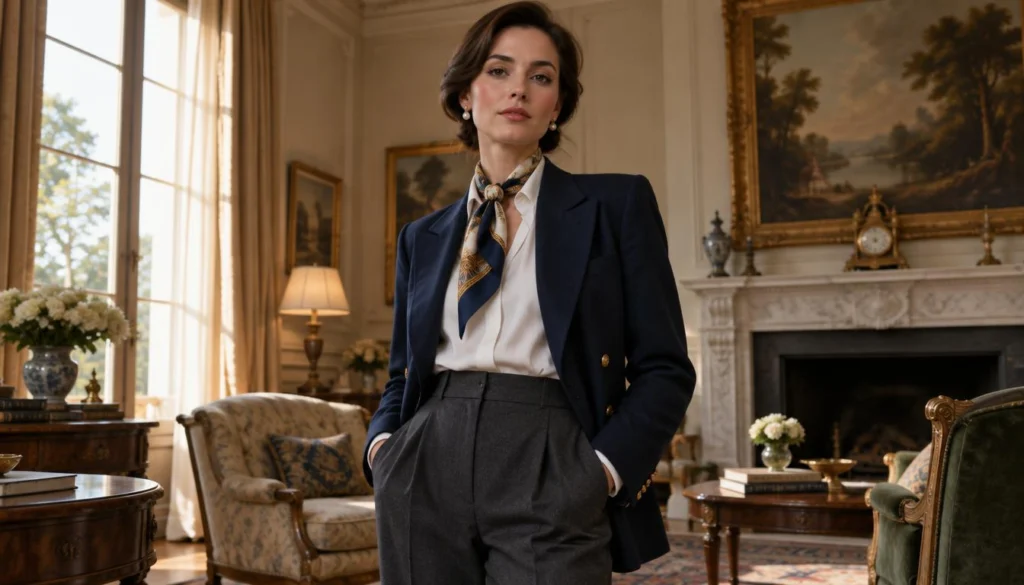
Understated Elegance Without Visible Logos
Understated elegance relies on shape, texture, and finish rather than a logo that announces the brand. Discreet logos or no visible branding keep attention on the garment itself. Clean tailoring, tidy seams, and simple closures often make a stronger impression than decorative hardware or a prominent monogram. This does not mean every item must be plain; a subtle pattern or a textured weave can add interest without overwhelming an outfit.
For old money style for women, restraint is a choice, not a rule that requires removing every personal detail. You can wear a memorable color or a piece with sentimental value while keeping the overall presentation balanced.
A Restrained Palette of Classic Colors
A neutral color palette is a helpful starting point: navy, cream, beige, white, and charcoal gray pair easily, while forest green and burgundy add depth. You do not need to wear every shade, or limit your closet to these choices. Treat the palette as a guide rather than a rigid dress code. Coordinating two or three colors in one outfit can keep the result composed while leaving room for personal preference.
Why Fit and Fabric Matter
Natural fabrics such as cashmere, merino wool, linen, silk, tweed, and Oxford cotton are valued for their distinct textures and uses. Their quality can contribute to a garment’s appearance and feel, but the cut still matters: a scratchy, stretched-out sweater or a jacket that pulls at the shoulders will not look polished. A clean, well-proportioned fit makes classic clothes feel intentional. These principles point toward the specific pieces that can put them into practice.
Which Wardrobe Essentials Build a Polished Capsule?
A structured trench coat can work over jeans on a casual day or over a dress for a more polished setting. Versatility matters more than owning every classic example: choose a few pieces that coordinate with clothes you already wear. Build around pieces you can combine, rather than buying a complete set at once.
Coats, Shirts, and Knitwear
A trench or camel coat can serve as a useful outer layer, while an Oxford cotton shirt and a silk blouse offer different levels of formality. Add knitwear in a weight that suits your climate and indoor routine. You might begin with one shirt and one sweater that both work with pants you own, then add another layer only if it fills a real gap.
Fabric choice affects comfort and care as well as appearance. Check the garment’s label and construction before deciding how to wash, dry, or store it; the same fiber can need different care in different garments.
Skirts and Tailored Pants
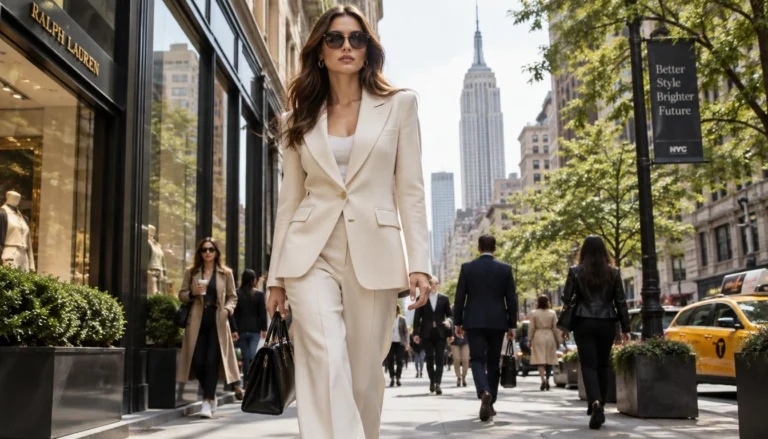
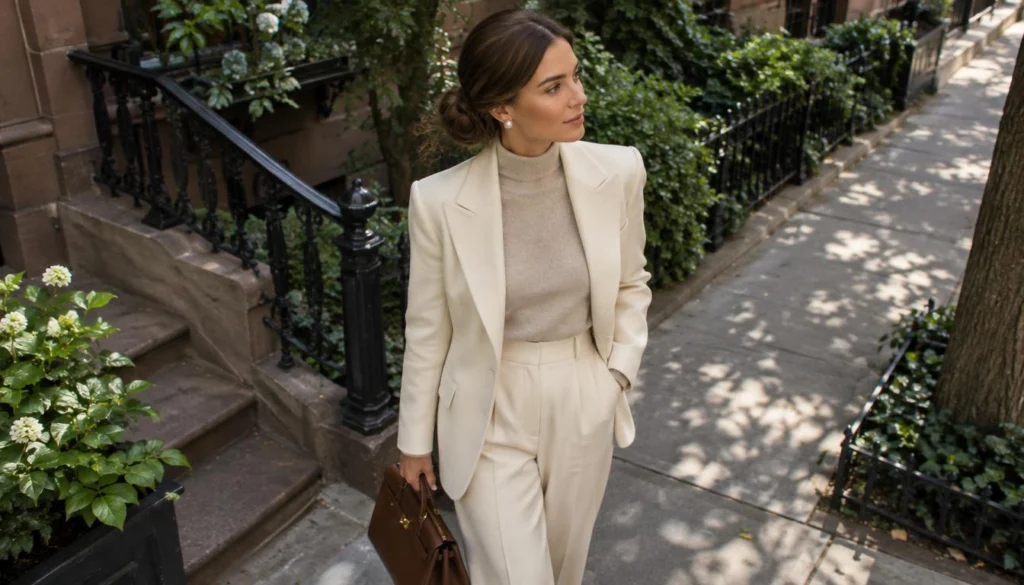
A pleated midi skirt can pair with a shirt or knit, while tailored trousers, straight-leg pants, and chinos provide classic alternatives to a skirt. Those are useful answers to what pants old money wears, but there is no single required cut. Choose the rise and leg shape that suit your proportions and comfort, then consider whether the fabric and finish fit the occasion.
Shoes and Everyday Bags
Loafers can make a simple outfit feel considered, and a minimalist leather handbag can work across several settings. Pick shoes you can walk in and a bag that holds what you actually carry. Use the fabric comparison below to narrow down options before combining your pieces into complete looks for particular settings.
| Fabric | Common pieces | Useful quality | Styling or care note |
|---|---|---|---|
| Oxford cotton | Button-down shirt | Woven texture gives the cloth a durable, substantial feel | Works tucked or untucked; follow the shirt’s care label |
| Linen | Summer shirt or trousers | Lightweight and breathable in warm weather | Wrinkles readily; check care directions before pressing |
| Merino wool | Sweater or base layer | Soft, fine fibers provide warmth without a bulky knit | Use the garment’s label to guide washing and drying |
| Silk | Blouse or scarf | Smooth drape and a light feel | Delicate weaves may need gentle or professional care |
How Can You Create Old Money Looks for Everyday, Work, and Summer?
A knit with tailored trousers and loafers feels relaxed; switching to dressier shoes or adding a structured coat makes the same base more polished. Small adjustments can shift an outfit to suit the day without changing its character. Choose combinations that fit both the setting and the way you need to move.
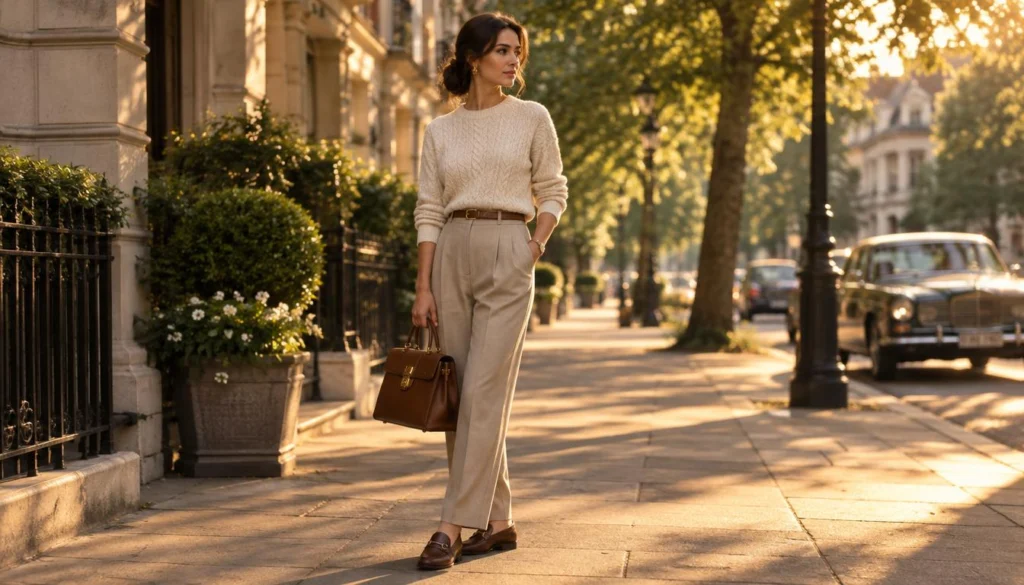
Use this four-step process to assemble a look from pieces that already coordinate:
- Choose a well-fitting base, such as pants and a knit or a skirt and blouse.
- Coordinate two or three colors so the pieces feel connected.
- Add a layer suited to the setting and weather.
- Finish with shoes and accessories appropriate to the occasion.
Casual Outfits With Classic Separates
For old money style for casual outfits, combine straight-leg pants with a button-down shirt, or wear a neat sweater with chinos and loafers. The result can be comfortable without relying on visibly branded athletic wear. If sneakers suit your plans, clean, simple ones can work; choose them for comfort and condition rather than a large logo. A jacket or sweater can make the outfit feel more finished when temperatures change.
Polished Looks for Work and Events
A blouse with a midi skirt and flats is one option for a meeting or daytime event. Tailored trousers with a knit top and a structured layer can also look professional without feeling overly formal. Follow your workplace dress code first: a formal office may call for a jacket or closed-toe shoes, while a creative setting may allow a softer combination. For an event, let its stated dress expectations guide how polished you make the outfit.
Summer Outfits in Breathable Fabrics
Old money style for summer can include a linen shirt with straight-leg pants, or a light blouse with a skirt and flats. Breathable fabrics, light layers, and the same restrained palette carry the look into warmer weather. A very hot, humid day may make extra layers impractical; adapt the fabric and coverage instead of treating one formula as mandatory. A formal workplace dress code may also call for different choices than a casual summer afternoon.
Once the main pieces suit the setting and the weather, smaller finishing choices can make the outfit look intentional.
What Finishing Details Keep an Outfit Refined?
A simple outfit can feel more finished when its shoes are clean and its bag is in good condition. Careful details support a polished appearance without turning the look into a display. Keep accessories and grooming appropriate to your routine, rather than treating them as requirements.
Restrained jewelry can include pearl accessories, small hoops, or a simple chain. A well-kept, minimalist leather handbag and clean footwear also help an outfit feel considered. Neat hair matters more than a prescribed cut: an old money style haircut is best treated as a tidy, wearable shape that suits your hair texture and the time you want to spend styling it. No pearl necklace or particular haircut is necessary; comfort and personal preference count.
Neat, well-maintained details support a polished appearance, but no single accessory or haircut is required.
Use this quick check before leaving home:
- Accessories: Keep jewelry simple and comfortable to wear.
- Bag and shoes: Check that both are clean and suited to your plans.
- Grooming: Choose a neat hair shape you can maintain easily.
- Garment condition: Look for wrinkles, loose threads, stains, and missing buttons.
Care does not need to mean constant dry cleaning or elaborate styling. Follow each garment’s care instructions, remove small marks promptly, and repair loose buttons before they become a larger problem. A lint roller can be useful for dark knitwear, while a shoe brush can remove surface dust from leather. Choose a personal, repeatable approach instead of trying to perfect every detail.
Conclusion
A polished wardrobe is built through considered choices, not a single purchase. Fit, coordination, and thoughtful care matter more than labels or replacing everything you own. You can make the aesthetic personal by working with clothes that already suit your life and adjusting only what feels out of place.
Choose one outfit you already own, check its fit and condition, then adjust one element, such as the shoes, a layer, or an accessory. Try that one change the next time you get dressed.
Explore more in our old money style overview covering this pillar.
Related reading: quiet luxury brands · old money outfits men · luxury handbags.
How we research: EliteSoda desk-researches brand sites, auction houses, authorized dealers, and established marketplaces such as Chrono24 and major hotel/resort directories. We do not invent lab tests, prices, or quotes.
By the numbers: Quiet luxury has deep commercial roots: LVMH acquired 80% of cashmere specialist Loro Piana in 2013 for €2 billion, a deal valuing the house at about €2.7 billion. Across the sector, Bain & Company puts the personal luxury goods market near €363 billion in 2024.
Frequently Asked Questions
Why is Gen Z so obsessed with Old Money style?
The polished, low-logo look may appeal because it feels timeless beside fast-changing trends. Its visual cues are also easy to interpret: classic shapes, neat presentation, and coordinated pieces can be adapted to many closets. Interest does not necessarily signal a wish to imitate actual wealth; some people may simply prefer a quieter alternative to highly branded or trend-driven clothing.
What does the 3-3-3 rule for clothes mean?
A common version of the 3-3-3 rule means choosing three tops, three bottoms, and three pairs of shoes that can be mixed and matched. It is a flexible planning prompt, not a universal rule or a required closet size. You can adjust the categories for your climate, dress code, and daily routine, or use the idea to plan a small travel wardrobe.
How to dress like you’re Old Money?
Choose classic, well-fitting pieces, coordinate neutral colors, keep branding subtle, and dress for the occasion. A neat Oxford shirt, tailored pants, or a simple knit can create that impression when the fit and condition are good. Expensive labels are not required, and buying a whole new wardrobe is not necessary if you can adapt pieces you already own.
What color makes you look expensive?
Navy, cream, beige, white, and charcoal are versatile choices that can look polished in coordinated outfits. No color alone makes clothing look expensive, and the same shade can appear very different depending on the garment’s fit and condition. A clean, well-fitting outfit in a color you enjoy will usually look more considered than a poorly maintained outfit in a supposedly luxurious shade.
What is the old money dress code?
There is no single formal dress code called old money. The usual visual cues are restraint, classic shapes, neat presentation, and clothing that suits the setting. A daytime event, a formal workplace, and a casual weekend call for different levels of polish. Let the occasion’s stated requirements take priority, then use classic details in a way that feels comfortable to you.
What color is an old money outfit?
Navy, cream, beige, white, charcoal gray, forest green, and burgundy are commonly associated with the look. You can use just two or three coordinated colors in one outfit rather than wearing the whole palette. These shades are starting points, not restrictions; a thoughtful combination and clothes in good condition matter more than following a fixed color formula.
What pants does old money wear?
Tailored trousers, straight-leg pants, and chinos are useful classic options. Choose the rise and leg shape that feel comfortable and suit your proportions, then consider where you plan to wear them. A lighter fabric may be more comfortable in warm weather, while a more structured pair can suit a polished work setting. The cut does not need to follow a single trend.
What clothes make you look wealthy?
Clothes cannot establish someone’s actual wealth, but good fit, clean condition, restrained details, and coordinated pieces can create a polished impression. A repaired button, pressed shirt, or clean pair of shoes can matter more visually than a recognizable label. Focus on wearing items that fit your life and maintaining them well, rather than trying to signal a financial status.
Sources and further reading
Prices, availability and specifications change; we check brand and retailer pages before each update. See our editorial standards.