Elite Soda is reader-supported. When you buy through links on our site, we may earn an affiliate commission at no extra cost to you. Read our affiliate disclosure.
This article may contain affiliate links. See our Affiliate Disclosure. For the wider category, see our fashion & beauty guide.
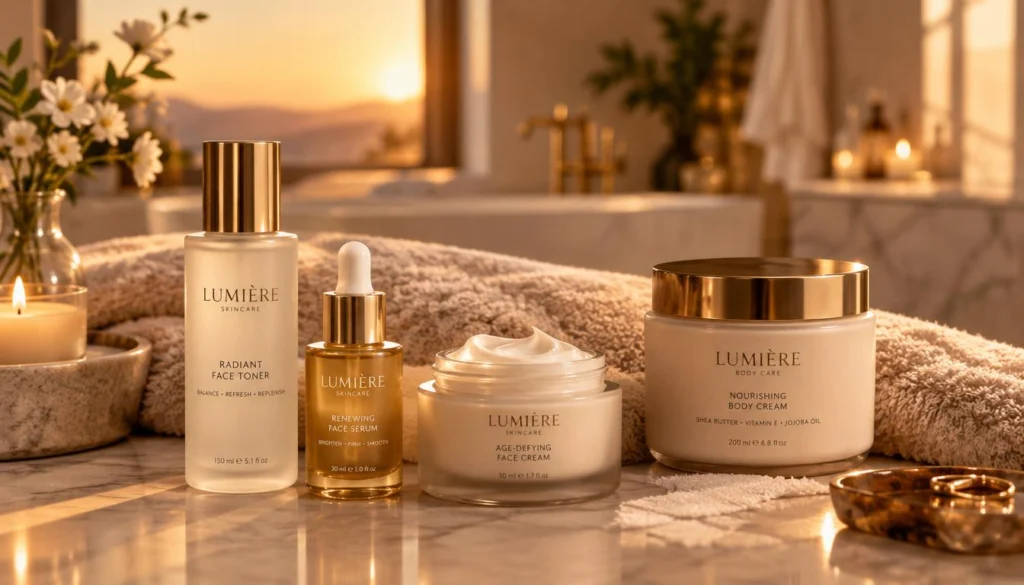
At the end of a long day, a luxury skin care brand can make washing your face and smoothing lotion over tired hands feel like a more deliberate ritual. Nourishing formulas and thoughtful textures can turn everyday face and body care into a daily ritual that feels considered, not hurried. A higher price and a beautiful jar do not guarantee better results for every person. Your skin, preferences, and habits still determine whether a product earns a place on the shelf.
A polished daily routine may appeal because it brings comfort as well as care, but you should expect products to suit your needs, not perform miracles. The useful choice balances formulas with your skin’s response and the amount of time you will realistically spend using them. That starts with looking beyond the packaging to the qualities that distinguish luxury care.
Key Takeaways
- Judge a formula by its purpose, tolerability, and fit, not price alone.
- Compare brand claims with your actual skin concerns and routine.
- Choose products you can use consistently and comfortably.
- Check directions and ingredient lists before buying.
- Add unfamiliar products one at a time so you can notice a reaction.
How to Choose a Luxury Skin Care Brand for Face and Body Care
Luxury is best judged by formula fit and experience, not price by itself. Research, distinctive ingredients, texture, scent, packaging, and service may all shape a premium offer, but none proves that a particular formula will suit your skin.
An active ingredient is a component included in a formula to target a specific skin concern, rather than simply cleanse or moisturize. Evaluate what a product is designed to do, whether its claim is supported by relevant evidence, and whether you can tolerate and afford the experience. A rare or proprietary-sounding ingredient is not proof of superior results.
Pay for a formula and experience that fit your skin, not a prestigious price tag or an impressive-sounding ingredient name.
- Ingredient purpose: identify what each active ingredient is intended to target.
- Relevant evidence: look for support that matches the specific product claim.
- Tolerability: consider fragrance, texture, and your history with similar formulas.
- Personal value: decide whether the experience is worth the cost to you.
Nourishing formulas can feel elegant without being complicated. Your shortlist becomes more useful when you compare the different approaches brands take, then judge each against these practical criteria.
Which Luxury Skin Care Brands Should You Compare?
There is no universally agreed top ranking of luxury skin care brands, so compare them by approach and fit. The phrase “top 10 skin care brands in the world” has no single accepted list behind it; the ten names below are an unranked starting point, not a definitive verdict.
Brand approaches and signature philosophies
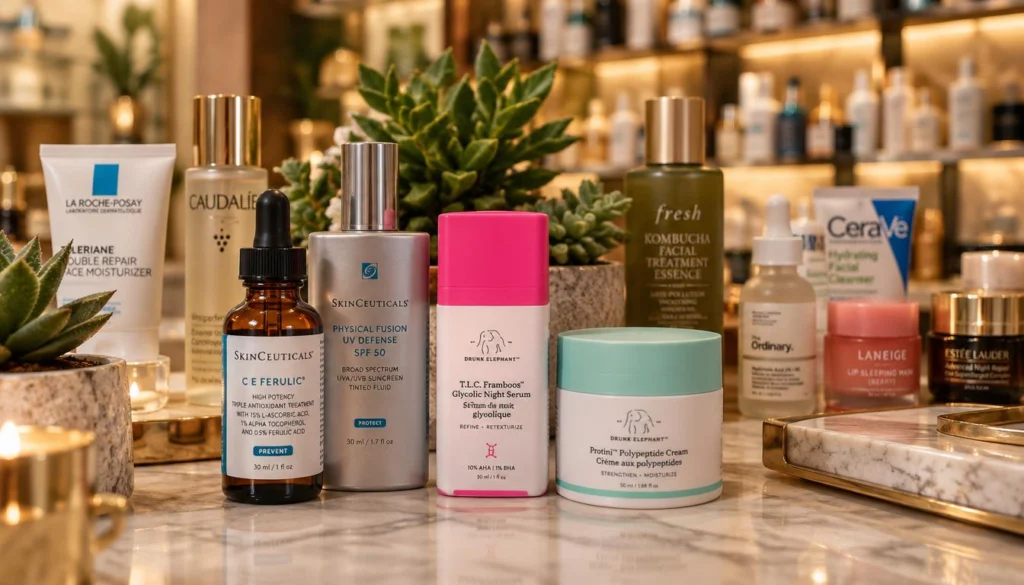
La Mer, Augustinus Bader, La Prairie, Sisley-Paris, SkinCeuticals, and Guerlain offer examples of prestige or science-oriented approaches, without guaranteeing any particular outcome. Drunk Elephant, Chanel, Dior, and Clé de Peau Beauté bring the illustrative group to ten. The brands differ in product ranges and presentation, so a name alone cannot tell you whether a formula fits your skin.
For anti-aging skincare, for instance, you might see claims built around clinical research, botanical extracts, or a blend of both. Those terms describe different approaches, not automatic proof that a product is effective or comfortable for you. Read the claim narrowly: ask what result is being described and whether the product is meant for your concern.
How to compare claims with your own needs
Compare a brand’s claims with your actual concern, your ingredient tolerance, and your willingness to use the products consistently. A rich cream may appeal on first use but become a poor choice if its texture makes you avoid it. Do not choose by a hero-product reputation without checking whether the rest of your routine suits you.
One well-known treatment does not make every cleanser or moisturizer from the same line a match. Consider each product’s purpose and how it fits alongside what you already use. Once the names are in perspective, the next useful decision is which formula types match your face and body needs.
How Do You Match Formulas to Face and Body Needs?
Two people with dry skin may need different formulas: one may prefer a light layer under makeup, while another may need a richer cream on tight, flaky areas. Skin hydration and comfort depend on the whole formula, not one ingredient name. Choose for the concern and your tolerance, then use the product directions.
Match facial formulas to the concern
For dryness, humectants such as glycerin or hyaluronic acid attract water. Ceramides are used to help support the skin barrier. Vitamin C and niacinamide commonly appear in formulas for uneven tone, while salicylic acid is an exfoliating ingredient used in blemish care. La Roche-Posay is one example of a dermatology-oriented brand, not a ranking or endorsement.
| Concern | Ingredient examples | Typical role | Selection note |
|---|---|---|---|
| Dryness | Glycerin or hyaluronic acid | Humectants attract water | Consider the full formula and tolerance |
| Barrier support | Ceramides | Help support the skin barrier | Choose a texture comfortable for regular use |
| Uneven tone | Vitamin C or niacinamide | Commonly used in tone-focused formulas | Check directions and compatibility |
| Blemish-prone skin | Salicylic acid | Exfoliating ingredient used in blemish care | Irritation and dryness are possible |
Choose body care for the areas you treat
Lightweight face formulas and richer body lotions or creams are useful options, not strict rules. Rough elbows may need a different texture from the rest of your body, while a heavy cream may feel uncomfortable on areas that sweat. Select textures you can apply without fuss. If irritation persists or you have a skin condition, a dermatologist may offer better guidance than adding more products.
Matching formulas to the area is only useful if you will use them. A workable routine puts those choices into a pattern that fits your day.
What Belongs in a Face and Body Care Routine?
A simple routine can cover the essentials with cleanser, moisturizer, and sunscreen in the morning, then a cleanse and moisturizer at night. Optional steps should earn their place by serving a need you have. Most face routines move from lighter, water-based textures toward heavier moisturizers, with sunscreen last in the morning.
Build a simple face routine
In the morning, cleanse if you need to, apply a targeted treatment if you use one, moisturize, and finish with sunscreen. Broad-spectrum sunscreen with SPF 30 or higher is a standard daily sun-protection recommendation in the United States. A face serum can deliver a targeted formula, but it is optional, not a required step.
In the evening, cleanse to remove the day’s soil, oil, and makeup, then moisturize. A treatment can be added if it suits your needs, but a basic cleanse-and-moisturize routine is a reasonable starting point. Skipping sunscreen in the morning leaves an important part of daily care out.
Make body care easy to repeat
Apply body lotion after bathing when it fits your schedule, and give extra attention to areas that tend to feel dry. A pump bottle beside the towel or a tube in a work bag can make the habit easier to remember. Choose a body lotion whose texture you like well enough to use regularly, rather than buying a cream that stays unopened.
Skin care products can be selected by role instead of matching every step to one brand. Keep product layering manageable: adding several new treatments at once makes it harder to tell what is helping or irritating your skin. With the routine roles clear, you can assess individual products and the places that sell them.
How Can You Judge a Skin Care Product Before Buying?
Compare two moisturizers by their role, texture, and ingredient list, not by packaging alone. A product’s format tells only part of the story; its intended use and directions matter too. Price depends on factors such as ingredients, concentration, packaging, and brand positioning.
| Product type | Main role | Typical format | What to check |
|---|---|---|---|
| Cleanser | Removes soil, oil, and makeup | Rinse-off | Whether it leaves skin uncomfortably tight |
| Serum | Provides a targeted leave-on formula | Liquid, gel, or emulsion | Active ingredient and directions |
| Moisturizer | Moisturizes and helps reduce water loss | Lotion or cream | Texture, fragrance, and tolerance |
| Sunscreen | Helps protect against UV exposure | Lotion, fluid, stick, or cream | Broad-spectrum label and SPF |
Sephora is an example of a multi-brand beauty retailer. Department stores, brand websites, and specialist spa retailers are other shopping channels; check that a retailer is authorized to sell the brand’s products. The Ordinary can serve as a comparison point for an ingredient-led approach, not as a luxury ranking. A clear label can help you judge the product’s role, but does not guarantee that it will suit you.
- Confirm the product’s intended role.
- Read the ingredient list and directions.
- Check return terms before purchase.
A focused purchase is easier to assess than a basket of products chosen on appearance alone. Once you have selected a candidate, add it cautiously so a reaction is easier to identify.
How Should You Introduce New Skin Care Products?
Introducing one new formula at a time makes it easier to spot a reaction. Follow the label and test the product on a small area as directed before applying it more widely. Adding several unfamiliar products together can make the cause of irritation difficult to identify.
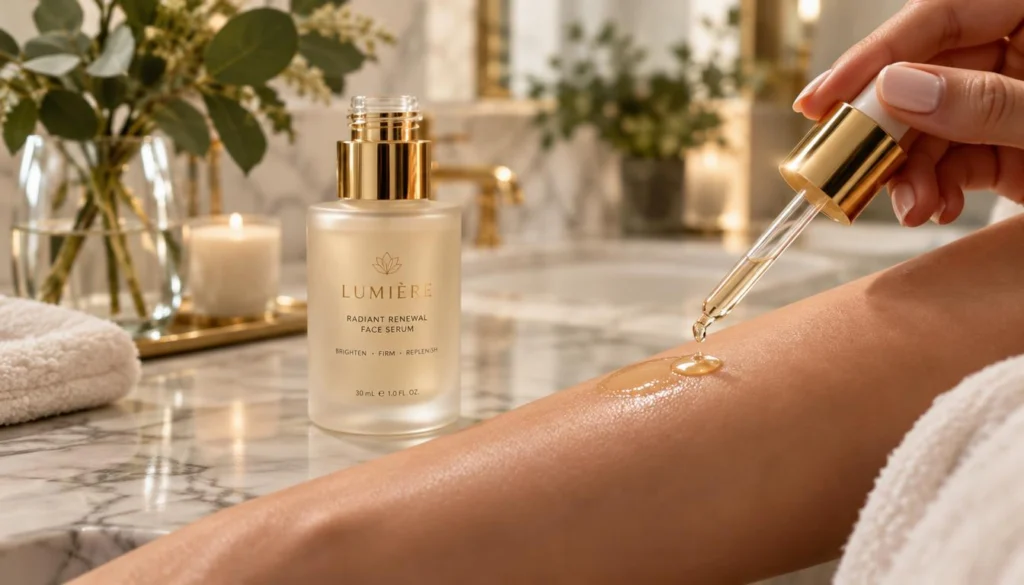
Give yourself a clear record of what changed by keeping the rest of your routine steady as you assess the new formula. Follow any directions about where and how often to apply it. A dermatologist may recommend a different introduction schedule if you are being treated for a diagnosed condition.
Topical retinoids can irritate skin. If you are pregnant or trying to conceive, ask a clinician about using them and how your individual circumstances affect that decision.
- Stop the new product if a concerning reaction develops.
- Return to a simpler routine while your skin settles.
- Seek medical advice for severe, persistent, or worsening symptoms.
A reaction does not mean every product will be unsuitable; it means you should pause and respond carefully. A useful ritual can stay simple, so your next step can be a realistic product choice rather than a complete shelf overhaul.
What Does a Polished Daily Skin Care Ritual Look Like?
One reader may want a two-minute routine before work, while another enjoys taking more time at night to apply products slowly. Both can make face and body care feel polished when the textures are comfortable and the timing is repeatable. A longer sensory ritual is not necessary for results.
For the quick version, keep the products you use most within reach and choose a moisturizer that absorbs comfortably. A lotion by the sink or a tube beside your toothbrush can make the habit easier to keep. You do not need a separate product for every small variation in how your skin feels.
If you enjoy a slower ritual, make the experience soothing rather than demanding: warm lighting, a comfortable cream, and a few unhurried minutes may be enough. Fragrance and rich textures can add sensory appeal, but they may not suit sensitive skin. A product that feels luxurious to one person may feel distracting to another.
Let your schedule set the length, and let your skin’s response guide which textures stay. A ritual becomes sustainable when it fits the life you actually have, not an idealized morning with unlimited time. Keep it personal, then make your next choice with a clear concern in mind.
Choose the ritual you can repeat comfortably; extra steps are optional, not a measure of how well you care for your skin.
Conclusion
The most useful luxury skin care choice is the one that fits your needs and supports a routine you can maintain; prestige alone is not a reason to buy. A small, well-chosen routine can be enough, especially when each product has a clear purpose and feels comfortable in regular use.
Before purchasing, identify your main concern and check one candidate product’s ingredients and directions against that concern and your existing routine. That single, focused check is a practical next step toward a choice you are more likely to use.
Explore more in our luxury skin care overview covering this pillar.
Related reading: old money style · luxury handbags · luxury perfume.
How we research: EliteSoda desk-researches brand sites, auction houses, authorized dealers, and established marketplaces such as Chrono24 and major hotel/resort directories. We do not invent lab tests, prices, or quotes.
By the numbers: The American Academy of Dermatology recommends a broad-spectrum, water-resistant sunscreen with SPF 30 or higher, applied about 15 minutes before going outside and reapplied every 2 hours. That step does more for skin aging than most premium serums. On the market side, Bain & Company found beauty among the fastest-growing luxury categories in 2024. Bain & Company also estimated the wider personal luxury goods market at about €363 billion in 2024, down 2% on the prior year.
Frequently Asked Questions
What are some expensive skin care brands?
La Mer, La Prairie, and Augustinus Bader are examples of luxury skin care brands. Their products and prices vary by item and retailer, so no fixed ranking describes which is most expensive. Compare the specific formula, its intended role, and whether its texture suits you rather than using a brand name as a shortcut for value.
What are the top 3 skin care brands?
There is no universally agreed top three skin care brands. A short list might include options known for different approaches, but the right three for you depend on your concern, ingredient tolerance, and routine. Compare a product’s purpose and directions with what you already use, and do not assume a popular line will suit every skin type.
What is the best high-end skincare line?
The best high-end skincare line is the one whose formulas address your concern and agree with your skin. Prestige alone cannot establish that fit. Look at the specific product’s intended role, ingredient list, directions, and texture, then consider whether you will use it consistently. A less elaborate line may be the better choice if its products fit your needs more comfortably.
What are the top 5 best skincare brands?
No universal top five skincare brands applies to every person. La Mer, SkinCeuticals, Sisley-Paris, Drunk Elephant, and Guerlain are five unranked examples to compare, not a definitive order. Evaluate each product against the same criteria: whether it targets your concern, whether you tolerate the formula, and whether its place in your routine makes sense.
What is the #1 skincare brand in America?
There is no single definitive number one skincare brand in America without specifying the measure. A ranking based on sales, customer reviews, or professional recommendations could produce different answers. Ask what “number one” means, then judge the individual product by its purpose, directions, and fit for your skin rather than relying on a broad label.
What are the top 10 best skin care products?
A universal top ten skin care products list is not meaningful for every routine. Cleanser, moisturizer, and sunscreen can serve essential roles, while serums and other treatments are optional and depend on personal needs. Your skin concern, tolerance, and habits should shape the selection. Ten products are not automatically more useful than a few well-chosen ones.
What is the No. 1 dermatologist brand?
There is no single universally designated No. 1 dermatologist brand. Dermatologists may recommend different products for different concerns, diagnoses, and tolerances. Assess the product itself: what it is meant to do, how it is used, and whether the formula suits your skin. If you have a persistent condition or irritation, a dermatologist can advise on your specific situation.
Sources and further reading
- IIHS vehicle safety ratings
- US DOE/EPA fuel economy data
- US FDA: cosmetics guidance
- American Academy of Dermatology
Prices, availability and specifications change; we check brand and retailer pages before each update. See our editorial standards.