
Elite Soda is reader-supported. When you buy through links on our site, we may earn an affiliate commission at no extra cost to you. Read our affiliate disclosure.
This article may contain affiliate links. See our Affiliate Disclosure. For the wider category, see our fashion & beauty guide.
Luxury brands can turn a sharply cut runway blazer into an everyday layer, appearing later over a T-shirt at a downtown office or a neighborhood café. That shift shows how fashion reaches American style: people borrow a shape, color, or way of wearing an item, then adjust it to suit their own routines and tastes. Consumers are not simply copying runway looks; their choices help decide which ideas last.
Quiet luxury is an understated style that emphasizes quality and restrained design over prominent logos. It is one example of how people can interpret fashion cues in different ways. This article explains how those exchanges affect fashion trends and consumer choices, and why the label alone does not define what a purchase means.
Key Takeaways
- Fashion influence moves between fashion houses and the people who wear their designs.
- Runway details can spread without shoppers buying the original item.
- Brand rankings depend on the criteria used to compare labels.
- A restrained look does not guarantee luxury-level materials or construction.
- Product value depends on how well it fits your needs and routine.
How Do Luxury Brands Shape American Style?
A runway detail such as an oversized shoulder or a vivid color can reappear weeks later in a more everyday outfit. That translation happens through collections, celebrity styling, editorial coverage, and social platforms, where a look can reach people well beyond the original show.
Influence spreads through ideas, not only through purchases. Mass-market designers may adapt a silhouette or color combination, while individual shoppers reinterpret it with clothes they already own. Adopting a designer trend does not require buying the original luxury item; a shopper might borrow the proportions of a tailored coat and choose a more practical fabric or price point.
Fashion influence spreads through ideas, not only through purchases of the original item.
Entertainment can extend that reach. Branding Strategy Insider describes LVMH’s 22 Montaigne Entertainment, launched with Superconnector Studios to connect producers with the fashion houses for possible content projects, in its account of LVMH’s pop-culture strategy. Such visibility can put particular shapes and styling choices before audiences who encounter them outside a runway setting.
Once a detail circulates, it may be changed to suit local habits, budgets, and personal taste. The fashion houses whose designs are especially recognizable show how varied those influences can be.
Which Global Fashion Houses Influence American Taste?
No universal ranking captures every meaning of “top,” because sales, recognition, category, and other measures can produce different results. Global fashion houses shape American taste through distinct design cues, but the labels grouped as the top 50 luxury brands or top 20 luxury brands in the world depend on the ranking method and the period measured.
The top 10 luxury brands in the world can vary by sales, recognition, or another stated criterion. A list that ranks business performance may differ from one focused on public familiarity or a specific product category. The table offers examples of international influence, not a ranked order.
| Brand | Country of origin | Recognized category | Characteristic style cue |
|---|---|---|---|
| Louis Vuitton | France | Luggage and leather goods | Travel-oriented monogram canvas |
| Chanel | France | Fashion and accessories | Tweed tailoring and quilted bags |
| Hermès | France | Leather goods and silk scarves | Leather craftsmanship and printed silk |
| Gucci | Italy | Fashion and leather goods | Eclectic patterns and recognizable hardware |
| Prada | Italy | Fashion and leather goods | Minimalist design |
These examples also show why a single label cannot stand for every kind of luxury influence. Louis Vuitton is a French fashion house known for luggage and leather goods; Chanel is a French fashion house founded by Coco Chanel. Hermès is a French high-end goods maker known for leather craftsmanship and silk scarves. Gucci and Prada are Italian fashion houses, with Prada associated with minimalist design.
Comparisons among Italian fashion houses also depend on whether a list focuses on apparel, accessories, revenue, or cultural recognition. The labels themselves are only part of the story; the signals that make their branding recognizable help explain how each maintains a distinct place in public view.
What Makes Luxury Branding Recognizable?
A familiar monogram or silhouette can identify a fashion house before a shopper sees a label. Recognition grows from visual details, repeated design choices, and the way a house presents its products.
Heritage and craftsmanship are brand cues to assess, not claims to accept automatically. A house may emphasize a long history or skilled making, but those signals do not by themselves establish how a particular product is built. Consumers can notice the story while still judging the item in front of them.
Heritage and craftsmanship
References to a house’s past can connect current designs to older forms, techniques, or product categories. Craft claims may point to hand-finishing or specialized materials, but the meaning varies by item. A shopper comparing two leather accessories can look at edges, seams, and hardware rather than treating heritage language as proof of equal construction across every product.
A question such as “What are the top 1 luxury brands in the world?” has no single answer without a chosen measure. A ranking by sales can produce a different result from a ranking by recognition, and neither necessarily describes the best-known fashion identity.
Visual codes and brand storytelling
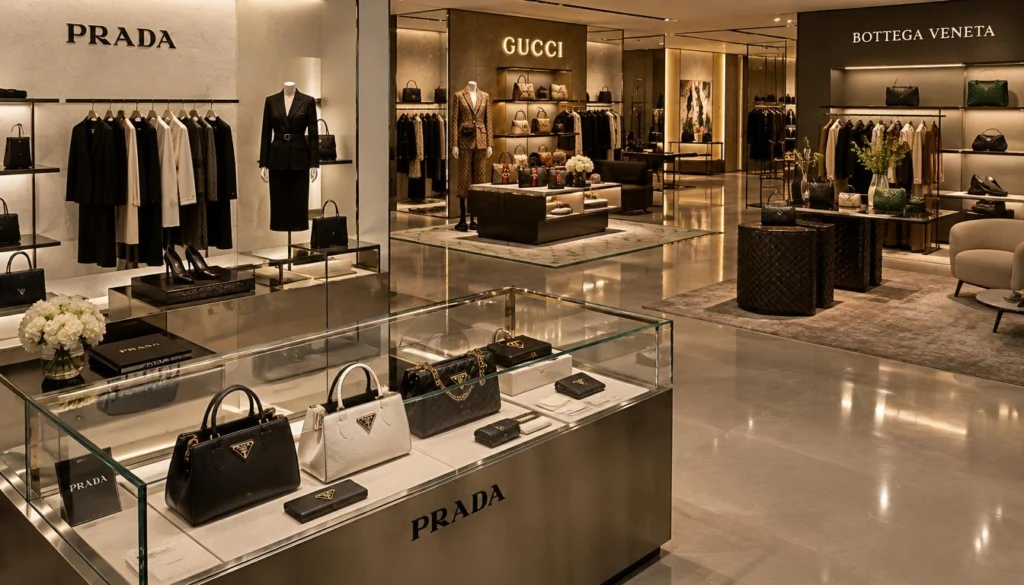
Monograms, signature shapes, recurring colors, campaign imagery, and retail environments help distinguish one label from another. A storefront’s materials and layout can reinforce the same visual language used in advertising or on a handbag. These devices build familiarity, but they do not tell a shopper whether an item suits a particular wardrobe.
- A monogram repeated across canvas bags and small leather goods.
- A recurring color or silhouette that appears across seasons.
- An artisan-made detail, such as carefully finished leather weaving.
- A recognizable campaign or store environment with consistent imagery and design.
A top 10 luxury brands in fashion list also depends on which categories it includes and whether it ranks sales, public recognition, or another quality. Visible brand signals make labels easy to identify; the quieter style often relies on their absence.
What Is Quiet Luxury, and Which Labels Fit the Look?
A simple, well-cut outfit with no prominent logo can still look considered and polished. Quiet luxury describes a restrained aesthetic, often marked by discreet branding, neutral colors, and attention to cut or materials.
The look is not proof of a particular price, heritage, or level of quality. A neutral coat can be well made or poorly made, just as a visible logo does not settle whether a product is useful. Quiet luxury brands are grouped by appearance, but the category includes labels with very different business models and product standards.
Accessible labels with a quiet-luxury look
COS, Everlane, Quince, and Massimo Dutti offer pieces that can create an understated look, such as clean-lined trousers, simple knitwear, or a plain leather belt. These are more accessible labels, not equivalents in price, materials, or heritage to established luxury houses. The similarity is primarily visual: restrained styling can be found at different price levels.
Established labels associated with a quieter aesthetic include The Row and Loro Piana. Their place in luxury fashion is distinct from that of accessible brands that offer a similar understated look. The choice between them is not simply a matter of whether an outfit has a logo; it also involves the specific product, its design, and what the shopper wants from it.
Quiet luxury handbags
For quiet luxury handbags, a discreet logo may direct attention toward the bag’s shape, leather, stitching, and hardware. The Row is associated with understated luxury design, Bottega Veneta with woven leather goods, and Loewe with its Puzzle bag. These recognizable designs illustrate different ways a handbag can appear distinctive without relying on a large logo.
| Brand | Recognizable handbag example or design | Visible design cue |
|---|---|---|
| The Row | Margaux bag | Structured shape with discreet branding |
| Bottega Veneta | Intrecciato woven leather | Interlaced leather surface |
| Loewe | Puzzle bag | Geometric panels and angular shape |
Those cues can help a shopper compare silhouettes, but a restrained appearance alone does not establish durability. A bag’s finish and construction still matter, particularly if it will be carried often or used for commuting.
What makes a bag read as understated
Look at the balance of branding, shape, and material rather than treating any single detail as a guarantee. A small or hidden logo, a clear silhouette, and a restrained palette may create the impression. For quiet luxury brands for handbags, the same visual language appears across labels with different prices and histories. Quiet luxury brands that are affordable may offer the look, but that does not make them interchangeable with established luxury houses. From visual preference, the next distinction is which labels have American roots.
Which Luxury Brands Are U.S.-Based?
Ralph Lauren, Coach, Tiffany & Co., and Michael Kors are U.S.-origin luxury labels. American luxury labels span apparel, leather goods, and jewelry, so their American roots do not point to one single design category.
A label’s country of origin is not the same as its current ownership. A brand can begin in the United States and later become part of a different corporate structure; origin does not necessarily mean the company is currently independent or owned by a U.S. parent company.
- Ralph Lauren: apparel and accessories.
- Coach: leather goods, including handbags and small accessories.
- Tiffany & Co.: jewelry and other luxury goods.
- Michael Kors: apparel, handbags, and accessories.
These familiar categories help distinguish a jewelry house from a fashion and accessories label, even when both are described as luxury. For shoppers, the country associated with a label can be useful context, but it does not determine whether a particular product is the right choice. The focus now shifts from brand origin to comparing a label with the item itself.
How Can Shoppers Judge Value Beyond the Label?
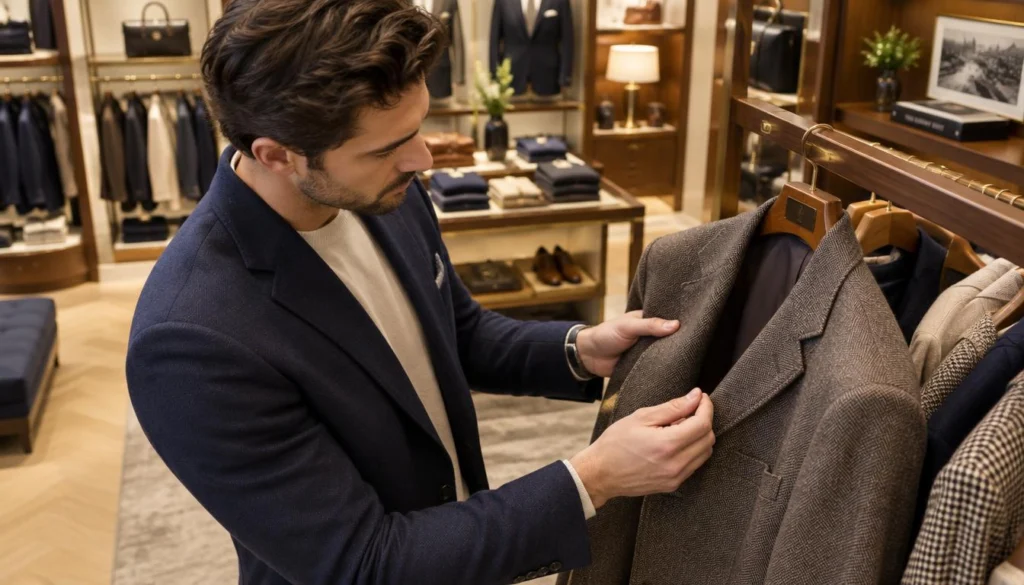
A shopper comparing two similar jackets can check their seams, closures, lining, and pockets before deciding which one is more useful. Those details reveal how the item is put together and whether its design supports the way it will be worn.
A famous label alone does not guarantee a good fit for your wardrobe or routine. Materials and craftsmanship matter, but so do comfort, function, upkeep, and how often you expect to use the item.
Inspect materials, construction and finish
Check whether the material feels appropriate for the garment’s purpose and whether seams lie flat, edges are finished, and hardware works smoothly. A decorative detail should not distract from loose stitching or a closure that catches. For a bag, examine the handles and strap attachment points; for shoes, consider how the sole and upper work together.
These observations do not require specialist tools. A careful look at the item’s inside and outside can help distinguish surface polish from considered construction. If the product is being bought online, clear descriptions and close-up images can make those details easier to assess, though they cannot replace the feel of wearing or handling it.
Match the item to its use and upkeep
Think about where the item will go and what care it requires. A light-colored coat may need more attention than a dark everyday jacket, while delicate materials may not suit frequent travel. A product that is difficult to maintain may see less use, even if its design is appealing.
- Inspect construction, including seams, lining, closures, and finish.
- Check comfort and function for the way you plan to use the item.
- Understand care needs, including cleaning and storage.
- Consider expected use and whether the item fits your routine.
That comparison puts craftsmanship in practical terms: the item should work as intended and be manageable to care for. A label can contribute to a product’s appeal, but a purchase is better judged against the way it will be worn, carried, or maintained. From individual decisions, the wider cultural meanings of luxury come into view.
What Do Luxury Choices Say About American Culture?
One person may choose a conspicuous logo as a point of recognition, while another prefers an understated design that draws less attention. Neither choice carries one fixed meaning; the same item can express personal taste, aspiration, status, or a practical preference.
Luxury choices reflect different priorities rather than one shared American outlook. Some shoppers value visible brand codes, while others prefer a discreet appearance or focus on how long a product may serve them.
Luxury choices reflect different priorities, not one shared American outlook.
Social platforms can make particular looks more visible, while resale gives some shoppers another way to buy or move on from luxury goods. Interest in longer-lasting products can also affect how people think about value. These influences do not erase individual differences: a purchase may be about a favorite color or silhouette as much as about status.
Price alone does not define style. People make different choices based on budget, identity, use, and what they enjoy wearing, and those priorities can change over time. Personal priorities, not a single trend, shape how luxury is worn.
Conclusion
Consumers shape fashion influence as much as they absorb it, adapting design ideas to the lives they lead. A recognizable label may provide a point of reference, but the most useful choice is the one that serves a shopper’s own priorities.
Before considering a label, choose one wardrobe priority: construction, versatility, or a particular visual style. Then assess a garment or accessory against that priority, looking at the features that matter for its intended use. That simple comparison keeps the product, rather than the name alone, at the center of the decision.
Explore more in our luxury brands overview covering this pillar.
Related reading: old money style · luxury handbags · luxury perfume.
How we research: EliteSoda desk-researches brand sites, auction houses, authorized dealers, and established marketplaces such as Chrono24 and major hotel/resort directories. We do not invent lab tests, prices, or quotes.
Which luxury brands lead in footwear and makeup?
In footwear, Christian Louboutin, Manolo Blahnik and John Lobb are among the most recognised luxurious footwear brands in the US market. Among luxury makeup brands, Chanel Beauté, Dior Beauty and Tom Ford Beauty are owned by or licensed to major luxury groups, which is why beauty is often the most accessible entry point into a luxury brand.
By the numbers: Bain & Company and Altagamma estimate global personal luxury goods sales at about €363 billion in 2024, a 2% dip that was the first contraction in 15 years outside the pandemic. Leaders still grew: Hermès 2024 results show revenue of €15.2 billion, up 15% at constant exchange rates.
Frequently Asked Questions
What are the top 10 Italian luxury brands?
Ten recognizable Italian luxury brands are Gucci, Prada, Armani, Versace, Dolce u0026amp; Gabbana, Valentino, Bottega Veneta, Ferragamo, Moncler, and Brunello Cucinelli. This is an example list, not a universal ranking. The order changes with the measure used, such as sales, public recognition, or focus on a particular category like fashion, leather goods, or outerwear.
What are some quiet luxury brands?
Established labels associated with understated design include The Row and Loro Piana. COS, Everlane, Quince, and Massimo Dutti offer more accessible clothing with a similar restrained look. The resemblance is mainly aesthetic; accessible labels are not equivalent to established luxury houses in price, materials, or heritage. A shopper should assess each item on its own construction and intended use.
What is quiet luxury?
Quiet luxury is a restrained style that relies on subtle design and quality cues rather than prominent branding. Common signals include discreet logos, simple silhouettes, and muted colors. The look does not guarantee craftsmanship, durability, or a particular price. A plain garment can be made to different standards, so the appearance alone cannot establish how well it is constructed.
What are 10 top luxury brands?
Ten recognizable global examples are Louis Vuitton, Chanel, Hermès, Gucci, Prada, Dior, Cartier, Rolex, Burberry, and Versace. The order is not universal because rankings can measure sales, brand recognition, or performance in a specific category. A list of fashion houses, for example, may differ from one that includes jewelry and watchmakers.
What brand do billionaires wear?
There is no single brand worn by all billionaires. Clothing and accessory choices vary by person, setting, and category, from tailored apparel to watches, handbags, or casual basics. Wealth does not determine one shared taste, and an expensive or recognizable label cannot identify someone’s financial status with certainty.
What are the top 50 luxury brands?
There is no definitive universal top 50 luxury brands list. Membership depends on the ranking’s measure and scope, including whether it compares sales, public recognition, fashion labels, jewelry houses, or other categories. A list built around apparel may exclude brands that appear in a broader luxury-goods ranking, so the criteria matter as much as the names.
What is No. 1 luxury brand?
There is no universal No. 1 luxury brand without a specified measure. A ranking by sales may identify a different leader from one based on brand recognition or a single product category. The answer also depends on which companies and types of goods the ranking includes, so a claim of first place needs a clear criterion.
Sources and further reading
Prices, availability and specifications change; we check brand and retailer pages before each update. See our editorial standards.