Elite Soda is reader-supported. When you buy through links on our site, we may earn an affiliate commission at no extra cost to you. Read our affiliate disclosure.
This article may contain affiliate links. See our Affiliate Disclosure. For the wider category, see our fashion & beauty guide.
At a casual lunch, old-money casual dressing can help you look considered without feeling overdressed. The style is an aesthetic built from fit, restraint, and versatile pieces, not evidence of your wealth or family history. In practice, it means choosing clothes that suit the setting and work together, rather than dressing to signal a status label. The look does not require expensive labels: a prominent logo cannot make an ill-fitting outfit feel more polished. What matters is how the clothes fit and function together.
A capsule wardrobe is a small, coordinated set of clothes designed to work in multiple outfit combinations. Keep your attention on practical choices you can wear often, and resist treating the style as a checklist of costly brands. A classic casual style should feel natural at lunch, on an errand, or at an informal gathering. The sections ahead offer a practical route from outfit principles to specific pieces, colors, and seasonal choices.
Key Takeaways
- Choose clothes that fit your frame and suit the occasion.
- Build outfits from pieces that work in more than one setting.
- Keep your palette restrained, then use an accent sparingly.
- Adjust fabric and sleeves to the weather and formality.
- Judge garments by fit and construction, not by their labels.
Old Money Outfits Men Can Wear for Classic Casual Style
Proportion and restraint matter more than dressing formally; they let casual clothes feel polished without looking stiff. Comfortable, clean lines are the aim, not a businesslike uniform or clothes that appear untouched by daily life.
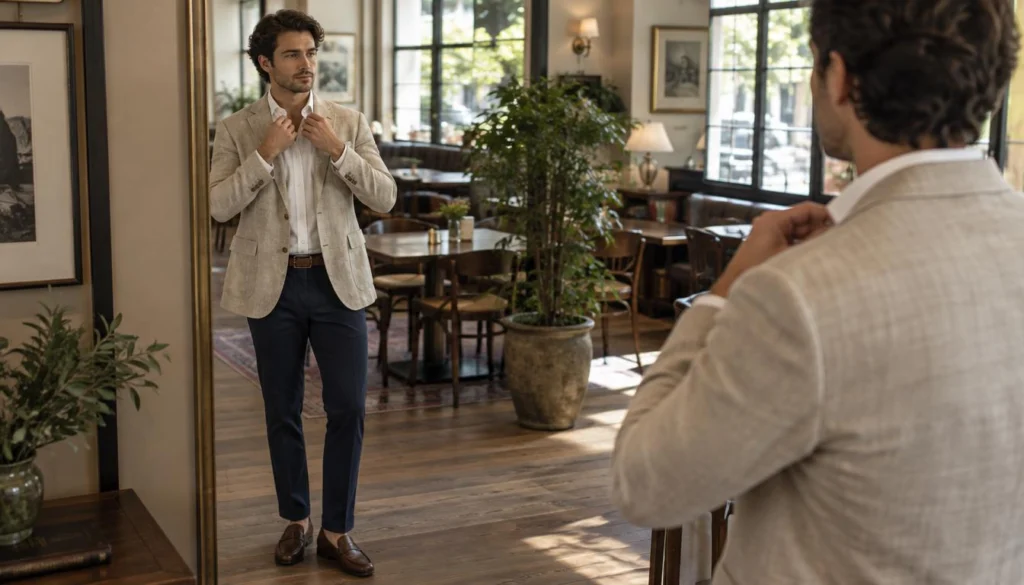
A useful casual outfit formula is one refined top, one clean-cut bottom, simple shoes, and no more than one structured layer. A knit polo with straight-leg trousers and loafers, for example, balances a refined piece with relaxed ones. A light jacket can add shape when the weather calls for it, but a second structured layer often makes the outfit feel too formal for an ordinary lunch or weekend plan.
Balance one refined top with casual pieces, simple shoes, and no more than one structured layer.
Choose relaxed, well-fitting silhouettes
Relaxed tailoring should give you room to move while keeping a clear shape at the shoulder, waist, and hem. A shirt that skims your torso and trousers that fall cleanly over the shoe usually look more composed than tight cuts or excess fabric. The common mistake is to confuse relaxed fit with clothes that are excessively loose or oversized. If a sleeve covers your hand or trouser legs pool around your shoes, the extra volume can overwhelm the outfit rather than make it comfortable.
Keep details and contrast restrained
For casual old money outfits for men, choose simple collars, quiet hardware, and subtle patterns instead of several attention-grabbing details at once. Old money style for casual dressing does not mean avoiding personality; a textured knit or a discreet stripe can add interest while the rest stays simple. Refined layers work best when they add a useful change in warmth or structure, not another focal point. With the fit and details settled, a few reliable wardrobe staples make these principles easier to apply.
Which Timeless Staples Make Casual Dressing Easier?
A button-down shirt can work for a casual workday or a relaxed dinner, making it a practical starting point. Versatile basics earn their place when you can combine them with clothes you already wear instead of saving them for one specific look.
A capsule wardrobe is a small, coordinated set of clothes designed to work in multiple outfit combinations. Start with pieces that suit your routine, then add only what fills a real gap. Before buying more, check which items you already own can make at least two useful outfits. The combinations below are examples to adapt to your workplace, plans, and weather.
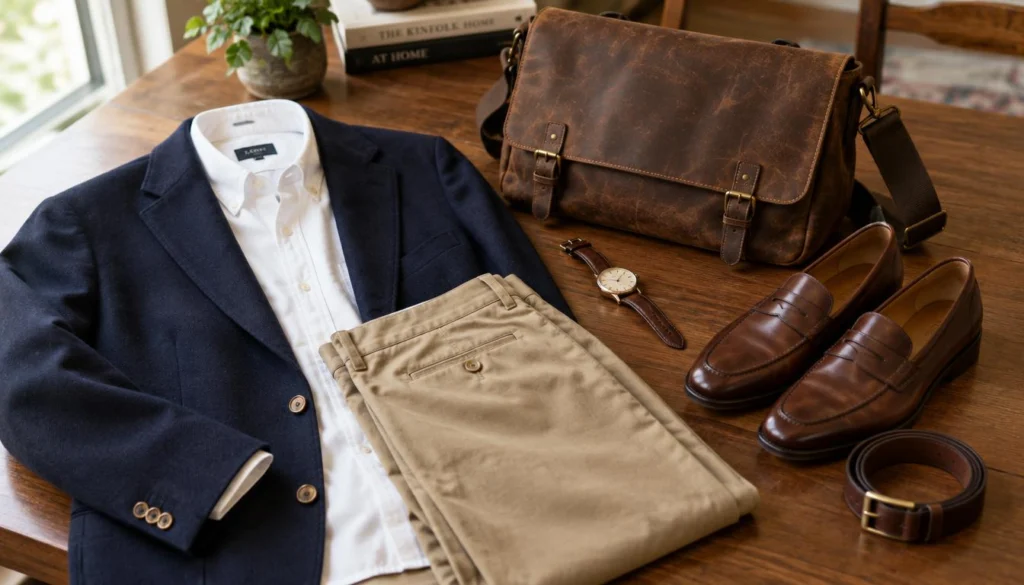
| Setting | Top | Bottom | Shoes or layer |
|---|---|---|---|
| Casual workday | Button-down shirt | Chinos | Leather loafers |
| Weekend errand | Plain crew-neck tee | Dark jeans | Clean sneakers |
| Relaxed dinner | Knit polo | Tailored trousers | Suede loafers |
| Mild-weather outing | Oxford shirt | Cotton trousers | Light jacket |
Use a short shopping-check list when comparing an item with your needs:
- Check the fabric composition.
- Inspect the seams.
- Check that the garment is opaque enough for its use.
- Confirm that it works with at least two items you already own.
Old money outfits for men at ZARA can be built by judging individual pieces for fit, fabric, and versatility rather than relying on a brand name. Apply the same standard at any store, and avoid buying a complete new wardrobe before checking what already works. Once you have useful pieces, combining their colors can make each one feel fresh.
How Do You Combine Colors, Including Black?
Try navy trousers with a cream shirt and a muted olive accent, such as a belt or light scarf. A small neutral color palette gives you a dependable base, while one subdued accent adds interest without making the outfit busy.
Begin old money outfits for men color combinations with two neutrals and one restrained accent. Navy, cream, gray, tan, and white can sit comfortably together; you do not need to wear all of them at once. Let one color lead and use the others in supporting roles. For example, gray trousers and a white shirt can take a muted burgundy knit, while tan chinos can pair with navy and a small touch of forest green.
Start with a small neutral palette
Choose two or three neutrals you already like wearing, then make sure new pieces can combine with them. A lighter shirt with darker trousers creates clear contrast without demanding a bold pattern. A muted accent works best in one place, such as a knit, belt, or small accessory, rather than appearing in several competing colors. The goal is a coordinated palette, not perfect matching from head to toe.
Make black look intentional
Old money outfits for men in black can feel balanced when you pair black trousers with a softer neutral top, such as cream, gray, or a pale blue. Black outerwear over a lighter base gives the outfit definition while leaving some contrast around the face and torso. Those black outfit combinations are usually easier to wear casually than dressing in black from head to toe.
A head-to-toe black outfit can read sharper and more urban than the softer classic look. If you prefer it, use texture and a considered fit to keep the clothes from appearing flat or severe. Year-round color choices are only part of the picture; summer calls for fabrics and outfit adjustments that account for heat.
What Works for Old-Money Style in Summer?
For a hot afternoon outdoors, choose a breathable-feeling shirt and bottoms that leave you comfortable without looking underdressed. Old money outfits for men in summer can use a short-sleeve shirt with tailored shorts or lightweight trousers, depending on the setting.
Heat, humidity, and the occasion should guide your fabric and sleeve choices. A short sleeve may suit an informal daytime plan, while a lightweight long-sleeve shirt can offer more coverage for a dinner or a cooler evening. Fabric names alone do not guarantee a neat appearance: even a lightweight garment can look untidy if it is too sheer or poorly fitted.
| Fabric | Feel or construction | Trade-off | Suitable use |
|---|---|---|---|
| Linen | Light, airy weave | Creases readily | Warm days and relaxed dinners |
| Cotton | Soft, familiar feel | Weight and breathability vary | Everyday shirts and trousers |
| Seersucker | Puckered weave holds some fabric away from skin | Distinctive texture may feel less formal | Hot-weather shirts and jackets |
Linen’s creases are part of its character, so choose it when a softly rumpled surface suits the occasion rather than expecting a pressed look to last all day. Cotton is widely adaptable, though a dense cotton shirt can feel warmer than a lighter weave. Seersucker’s raised texture helps keep some cloth away from the skin, making it a useful warm-weather option. Keep the rest of the outfit neat when the fabric itself has visible texture. These summer choices are most useful when you assess the garment’s quality rather than relying on a label.
How Can You Shop for Quality Without Chasing Luxury Labels?
A polished classic look does not require luxury labels; it depends on garments that fit, feel suitable, and work with what you own. Look at the piece itself, not just the name on its tag.
Check fit, fabric feel, construction, and compatibility with your existing clothes before you buy. Examine the garment in natural movement: raise your arms, sit down, and see whether seams pull or the hem shifts awkwardly. A fabric can feel pleasant in a store but still be too thin or stiff for how you plan to wear it. Good construction is not a promise of perfection, so inspect the stitching and closures rather than assuming a high price guarantees quality.
Alterations can improve an otherwise suitable garment. A small hem adjustment or a cleaner sleeve length may be enough to make a piece sit better, while a major change to the shoulders may not be practical. A prominent logo does not make an outfit more refined, and a quiet label does not guarantee a good fit.
Not every item merits tailoring or a higher spend. Prioritize fit-sensitive pieces, such as trousers or a jacket, when you expect to wear them often; save extra attention for the garments that have the biggest effect on your everyday outfits. A rarely worn item may not justify costly changes. Once your buying choices are considered, small finishing details help the clothes look cared for.
How Do You Finish an Outfit With Fit and Care?
Scuffed shoes can make an otherwise sound outfit look neglected, even when the clothes are clean. A few finishing checks help your look feel intentional without adding unnecessary accessories.
Choose clean, simple footwear and make sure clothes sit properly at the shoulders, waist, and hem. Shoes should suit both the garment and the occasion; a pair that works for a relaxed dinner may not be right for a wet walk or a long day on your feet.
Clean shoes and clothes that sit properly at the shoulders, waist, and hem make an outfit look cared for.
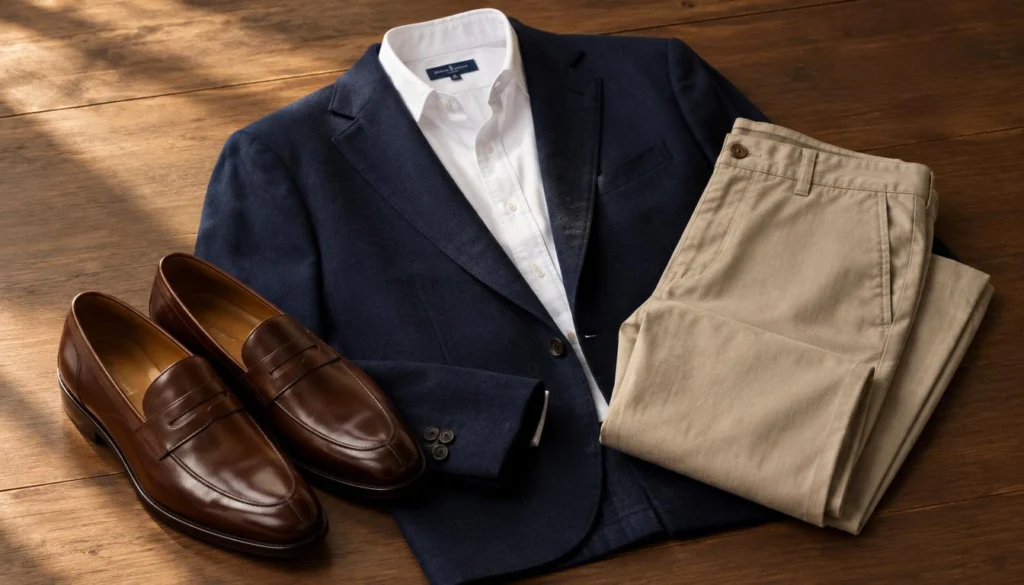
Before wearing a piece, check that its collar lies flat, its waistband stays comfortable when you sit, and its hem does not bunch excessively. The right shoes and care routine depend on the garment and the occasion, so do not treat one maintenance habit as suitable for everything. A quick check can catch small issues while they are still easy to fix.
Use this four-item care checklist:
- Follow the garment care label.
- Brush or wipe shoes as appropriate.
- Hang or fold items to preserve their shape.
- Repair loose buttons or small seam issues promptly.
A minute spent on a loose button or dusty shoes can matter more than adding another accessory. Use these checks as a quick final step before wearing an outfit.
Conclusion
A convincing casual look can begin with a few well-chosen pieces already in your closet. Two takeaways matter most: start with clothes that fit and coordinate, and keep the details understated. You do not need to change your whole wardrobe to make the style feel more considered. Before buying anything new, choose one outfit from the clothes you already own and adjust its fit or color balance. That single practical step gives you a clear way to improve what you wear, while keeping the result grounded in your own routine.
Explore more in our old money outfits men overview covering this pillar.
Related reading: old money style · quiet luxury brands · luxury handbags.
How we research: EliteSoda desk-researches brand sites, auction houses, authorized dealers, and established marketplaces such as Chrono24 and major hotel/resort directories. We do not invent lab tests, prices, or quotes.
By the numbers: Classic menswear houses remain big business. LVMH bought 80% of Loro Piana in 2013 for €2 billion, and Bain & Company estimates the personal luxury goods market at around €363 billion in 2024, down 2% year on year as shoppers became more selective.
Frequently Asked Questions
How to dress like an old money guy?
Start with well-fitting, understated basics and simple shoes; luxury labels are not required. Choose clothes that suit the occasion and avoid stacking several statement details in one outfit. A neat shirt, clean trousers, and shoes in good condition can feel polished without looking formal. The most useful test is whether the pieces feel comfortable and work with clothes you already wear.
What is the best clothing brand for older men?
There is no single best clothing brand for every age or body type. Compare labels by how their garments fit you, how the fabric feels, and whether the store offers a practical return or alteration option. A brand that works well for one person may cut its shirts or trousers differently from what you prefer. Try individual pieces rather than choosing by reputation alone.
What is the 3-3-3 rule for men’s clothing?
The common capsule-wardrobe version means choosing three tops, three bottoms, and three pairs of shoes. It gives you a compact starting point for trying combinations, but not every theoretical pairing will work. A formal shoe may not suit a casual top, for instance, and weather can limit what you wear. Treat the rule as a planning exercise, then keep the combinations that fit your routine.
Why is Gen Z obsessed with old money?
For some Gen Z audiences, the style’s appeal may come from restrained, recognizable outfits that are easy to identify and interpret in fashion and social media. That is a style and media interpretation, not a claim about every person in the generation. The look also offers a way to dress polished without relying on visible logos. Individual interest varies, and people may adopt the aesthetic for different reasons.
How to dress like old money?
Choose coordinated neutrals, clean fits, and restrained details, then adapt the pieces to the setting. A relaxed daytime outfit may call for simple shoes and a softer shirt, while dinner may suit a more structured choice. Keep the clothes comfortable enough for the plans you have, and avoid treating a particular brand or accessory as essential. Fit and balance do more work than a label.
Sources and further reading
Prices, availability and specifications change; we check brand and retailer pages before each update. See our editorial standards.