
Elite Soda is reader-supported. When you buy through links on our site, we may earn an affiliate commission at no extra cost to you. Read our affiliate disclosure.
This article may contain affiliate links. See our Affiliate Disclosure. For the wider category, see our fashion & beauty guide.
At checkout, you need to reach a payment card quickly without hauling a full wallet through the day. A luxury card holder can keep essential cards close at hand while giving you a refined profile that fits a minimalist carry routine. The right choice starts with the cards you use most, how you prefer to store them, and whether a slim case suits your pockets or bag.
Good everyday organization should make quick access feel natural, not turn a simple payment into a search. Think about your daily routine: a few cards and an ID call for a different capacity than receipts, cash, or coins. A pocket-friendly profile may be useful, but only if the cards stay put and the format works for the way you move. A few practical security features can help keep everything in place.
Key Takeaways
- Start with the cards you carry on a normal day.
- Match capacity to your pocket or bag routine.
- Look for reliable card retention without difficult removal.
- Choose a closure only if it suits how you access cards.
- Check dimensions and current care guidance before buying.
What Makes Everyday Card Storage Secure?
Card security comes from a well-fitted slot and, where relevant, a dependable closure, not from a logo. Card retention means how securely a slot or closure keeps a card from slipping out during ordinary movement. A suitably snug fit, a closure that shuts fully, and room for the intended load are the essentials.
A card should stay put during ordinary movement, while remaining easy to remove without force.
Check the fit with the number of cards you actually plan to carry. A new slot may feel firm, but it should not make removal difficult; forcing a card can damage it or stretch the slot. Shared compartments also lose their grip when overfilled. A snap or zipper helps only when it closes completely, and carrying the case where you sit on or bend it can compromise the fit.
- Turn the case upside down and confirm the cards stay put.
- Check that a snap or zipper closes fully.
- Avoid overfilling slots shared by multiple cards.
- Choose a carry position that does not bend the case.
These checks help you match your security needs to a format that provides the right balance of access and coverage.
Which Card-Holder Format Fits Your Daily Carry?
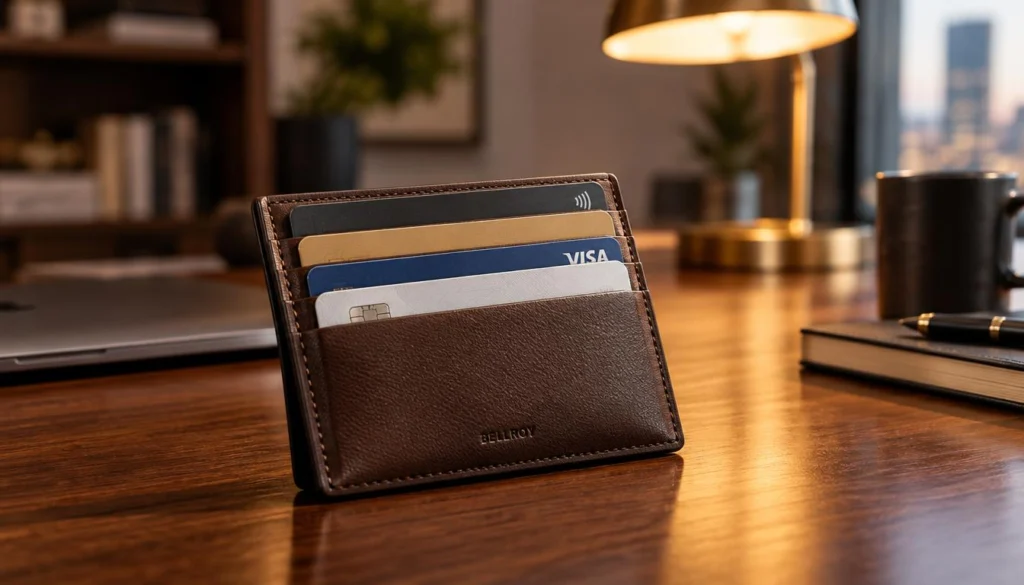
If you carry only a few cards, a flat case with separate flat slots can keep your daily load slim and easy to reach. Choose a format according to what you carry and how you want to access it, rather than the product name alone. A case with no closure has fewer steps at checkout, while covered or larger designs can hold more items at the cost of added bulk.
Flat Slots for a Slim Pocket Profile
Flat-slot cases suit a small set of cards and a preference for quick access. Each card can have its own place, and the case can slide easily into a front pocket. This format leaves little room for extras, so it is best when bills, receipts, and coins are not part of your regular carry. A crowded slot can also make a slim case harder to use, even if its exterior dimensions look right.
Snap-Closure Envelopes for a Covered Carry
An envelope-style case with a snap closure covers its contents when shut. It may feel more secure inside a bag or when you want the cards held behind a flap, though opening the snap adds a small step when paying. Check how the flap sits when the case is filled, since added contents can affect whether it closes smoothly.
Zippered Pouches and Wallet-Style Organizers
A zippered pouch or wallet-style organizer can offer more room and a closed compartment for loose items. The trade-off is a thicker format and, often, less immediate access than a simple slot case. “Designer wallet” and “card holder” can describe products with very different capacities, so check whether a specific design also accommodates folded bills or coins. A slim case is not a good fit if you routinely carry coins or several folded receipts.
Once capacity and access are clear, you can weigh the style choices that shoppers often consider without letting a category label dictate what suits you.
Are Men’s and Women’s Luxury Styles Different?
The same design can work for any gender if its size and features suit the person carrying it. Personal preference, not a gender label, should guide choices about color, branding, dimensions, and closure. Compare the actual shape and carry experience rather than treating men’s accessories or women’s accessories as rules about function.
Searches for a luxury card holder for men, a luxury card holder for women, or luxury wallets for ladies may lead to different collections, but those terms do not define who can use a design. A gender-neutral design may be the best match if its capacity and finish work with your routine. Consider where you carry it first, then decide which visual details feel right.
| Carry pattern | Useful design priorities | Trade-off to consider |
|---|---|---|
| Front-pocket carry | Slim dimensions and smooth edges | Less room for extras |
| Bag carry | Easy access and a secure closure | Extra bulk in the bag |
| Mixed carry | Versatile dimensions and a low-profile finish | Possible compromise in capacity |
These priorities make the practical differences between designs easier to spot. From there, compare the materials and finishing details that shape the look and feel.
How to Choose a Luxury Card Holder by Material and Design
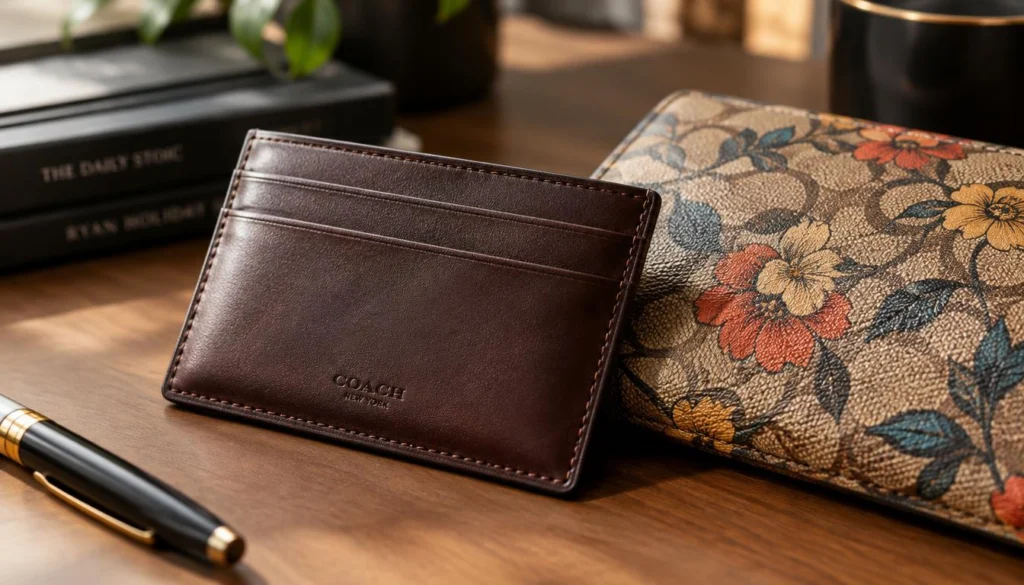
Smooth leather offers a tactile, often supple surface, while coated canvas typically has a more visibly patterned look. Neither appearance alone tells you whether a piece suits your routine. Compare the finish, construction, slot layout, and closure against the way you plan to carry it.
| Material family | Typical character | Care consideration |
|---|---|---|
| Smooth or grained leather | Natural surface, with smooth or textured grain | Protect from moisture and follow item-specific guidance |
| Coated canvas | Patterned fabric surface with a coating | Use gentle surface cleaning; avoid abrasive scrubbing |
| Exotic skins | Distinctive natural scales or markings | Follow the item’s specific instructions or consult a specialist |
For a closer look at different design approaches, inspect the Hermès Calvi Card Holder, Louis Vuitton Pocket Organizer, Dior Saddle Bloom Card Holder, Montblanc Sartorial Card Holder 5cc, and Cartier Losange Card Holder. Treat each as an example to assess, not a shortcut to assumptions about its current specifications. Check each model’s current dimensions, slot layout, closure, and care guidance so you know what the particular design offers.
House, material, construction, and added features all affect cost, which makes those details useful when you set a budget.
What Should a Luxury Card Holder Cost?
Luxury card holders commonly cost about $200-$800 or more in the United States, as an approximate market guide rather than a promise for any named model. The price varies by designer house, material, construction, and added features.
For your luxury accessories budget, consider what you are paying for beyond the name. A simpler design may have fewer compartments or a basic closure, while more involved construction or added features can move a piece higher. The main price factors are:
- Designer house
- Material
- Construction and finishing
- Added features such as a closure or extra compartments
Current prices can change, so check the retailer’s listed price before you purchase. After setting a comfortable budget, consider how to preserve the case’s appearance and function through regular use.
How Should You Care for Leather, Canvas, and Specialty Finishes?
If you spot a small mark, wipe it gently rather than reaching for a strong household cleaner. Gentle handling helps limit preventable wear, while the right care depends on the specific finish. For an unfamiliar coating or delicate skin, use item-specific instructions or a qualified specialist instead of a universal cleaner.
Cleaning and Storing Leather
Handle leather with clean, dry hands when practical, and attend to moisture promptly by blotting rather than rubbing. Let a damp case dry naturally, away from prolonged heat or direct sunlight. Those conditions can affect the surface over time. Store it in a dry place where it is not pressed under heavy objects, which can leave creases or distort its shape.
Leather care should follow the guidance for the particular finish. Avoid unverified home treatments on delicate or treated surfaces, since a product meant for one leather may alter another. A strong cleaner or improvised polish can leave a mark that is harder to remove than the original spot.
Caring for Coated Canvas and Specialty Skins
For coated canvas care, keep surface cleaning gentle. A soft, slightly damp cloth may be suitable when the item’s instructions allow it; abrasive scrubbing can scratch or damage the coating. Do not assume that a printed or coated surface can withstand the same treatment as plain fabric.
Exotic skins and unfamiliar specialty finishes need more specific attention. Check the care instructions for that exact item, or consult a qualified specialist if the guidance is unclear. This is especially important before applying moisture or any cleaning product. Sensible finish protection starts with following the surface’s own requirements, then storing the case where it will not be crushed or exposed to prolonged heat. With routine care in mind, turn to the checks that matter before buying.
Conclusion
Choose the case whose capacity and fit keep your cards secure in your normal routine, rather than choosing by designer name alone. Reliable retention matters more than a long slot count if the cards feel loose or the case is uncomfortable to carry. Use this five-item purchase checklist before you decide:
Fit your everyday cards to the case, then confirm its dimensions and closure before buying.
- Count the cards you carry on a normal day.
- Confirm the slot layout and closure.
- Check dimensions against the pocket or bag you intend to use.
- Verify current material and care details.
- Review the seller’s current terms before purchase.
When comparing the best luxury card holders for men, judge each option by fit and use rather than by the label. Make the next step concrete: compare the dimensions and slot layout of two options against the cards you carry every day.
Conclusion
The right choice keeps daily essentials organized without adding unnecessary bulk. Secure everyday storage depends on a suitable fit, practical capacity, and a format that matches your routine, whether you carry the case in a pocket or a bag.
Give preference to a design that feels easy to use with your actual cards, not one whose advertised capacity requires crowded slots. Before buying, check the preferred option’s current specifications and care guidance so its dimensions, layout, and finish suit the way you plan to carry it.
Explore more in our luxury card holder overview covering this pillar.
Related reading: old money style · luxury handbags · luxury perfume.
How we research: EliteSoda desk-researches brand sites, auction houses, authorized dealers, and established marketplaces such as Chrono24 and major hotel/resort directories. We do not invent lab tests, prices, or quotes.
By the numbers: A standard credit or debit card follows the ISO/IEC 7810 ID-1 format, 85.60 mm by 53.98 mm and about 0.76 mm thick. A slim holder with 4 to 6 slots usually adds less than 10 mm of thickness in a jacket pocket.
Frequently Asked Questions
How many cards should a compact case hold?
A compact case should hold the cards you carry on a typical day, often just a few essential cards. Count your usual daily load, then compare it with the actual slot layout. A listed slot count does not guarantee that every compartment will remain comfortable when cards share space or when a slot is overfilled.
Can a card holder replace a wallet?
Yes, a card holder can replace a wallet if cards are your main daily need. It may not suit you if you regularly carry coins, receipts, or more than a few folded bills. Check the specific design for a compartment that accommodates those items; the product name alone does not tell you its capacity.
Do luxury card holders have RFID blocking?
Some may, but do not assume a luxury card holder has RFID blocking. Check the exact model’s specifications for electronic shielding. RFID protection and physical card retention are different features: a snug slot or closure helps keep a card in place, but does not establish that the case blocks electronic scanning.
Is coated canvas more durable than leather?
There is no single answer for every finish; compare the specific item and its care guidance. Coated canvas can resist some everyday surface scuffs, while leather can develop marks and patina with use. The way either material wears depends on its finish and how it is handled, so follow the item’s instructions rather than judging by material name alone.
Can I carry a card holder in a back pocket?
You can, but a back pocket may expose the case to pressure and bending, especially when you sit on it. That repeated flex can affect its shape and the way slots hold cards. Choose a carry position that keeps the case from being sat on or bent, and avoid carrying it beneath items that press against it.
How can I tell if a card slot is too tight?
A card slot is too tight if you need force to remove the card, even if the card stays in place. A suitable fit holds the card during ordinary movement and still lets you slide it out without straining. Test the slot without overloading a shared compartment, since extra cards can make removal harder.
Sources and further reading
- IIHS vehicle safety ratings
- US DOE/EPA fuel economy data
- LVMH group maisons and annual reports
- Bain & Company luxury market insights
Prices, availability and specifications change; we check brand and retailer pages before each update. See our editorial standards.