

Elite Soda is reader-supported. When you buy through links on our site, we may earn an affiliate commission at no extra cost to you. Read our affiliate disclosure.
This article may contain affiliate links. See our Affiliate Disclosure. For the wider category, see our automotive, yachts & aviation guide.
A group planning a superyacht trip might picture a relaxed harbor-hopping escape, while another wants a longer passage along the coast. The right choice depends on how many days you have, the pace you prefer, the needs of your guests and the kind of coastline you want to experience. Those decisions matter because a busy itinerary can leave little room to enjoy the vessel, while a leisurely plan may not suit guests eager to cover more ground.
For a rewarding coastal escape, the route, crew and onboard experience need to work together rather than be selected in isolation. Practical charter planning starts with your group’s shared priorities, then turns them into a trip that fits the days available and the way you want to travel. The first practical decision is the charter format.
Key Takeaways
- Choose a trip pace that fits your available days.
- Match the vessel and crew to the route you have in mind.
- Build the itinerary around guest needs and local conditions.
- Check guest limits and what the charter fee includes.
- Share dates, party size and priorities when requesting options.
Which Superyacht Charter Format Fits Your Trip?
The right format depends on the pace, range and onboard experience your group wants. A crewed charter is a temporary hire of a vessel with professional crew included, and the vessel and charter style should suit the trip you actually plan to take.
Choose a vessel and charter style that suit your group’s pace, range and preferred experience.
The meaning of superyacht depends partly on industry context. It commonly refers to a luxury yacht around 24 meters (79 feet) or longer, but there is no single universal cutoff. “Megayacht” is an informal, overlapping term for very large yachts, with no fixed line separating a superyacht vs mega yacht.
These differences can help narrow down superyacht routes and the vessel that can support them:
| Vessel type | Propulsion or design | Best-fit trip |
|---|---|---|
| Motor yacht | Engine-powered | Flexible coastal travel and covering distance |
| Sailing yacht | Designed to sail, often with engines for maneuvering | A trip centered on sailing and a measured pace |
| Explorer yacht | Built for extended range and varied conditions | Longer passages and less-traveled coastlines |
A whole-yacht charter gives your party private use of the vessel and its crew. Superyacht cruises can mean a cruise-style voyage, where the operator sets a route and schedule for a group of passengers rather than arranging a private whole-yacht hire. A superyacht for rent is generally offered as a private charter, though availability and terms depend on the individual booking. Once the vessel and format are clear, turn to the coast and route that fit them.
How Do You Choose a Coastal Destination and Route?
The same number of charter days can feel spacious on a short harbor route and rushed on a longer coastwise passage. Available time matters because route feasibility depends on the vessel, weather and local access, not just the distance on a map.
Coastal route planning starts by weighing the character of each area against the experience your guests want:
| Area | Typical route character | Practical planning consideration |
|---|---|---|
| New England | Harbor visits and island stops | Seasonal conditions affect the usable travel window |
| Florida and the Bahamas | Coastal cruising with island passages | International stops require checking entry requirements |
| Gulf Coast | Shallow-water areas and port visits | Local access and anchoring options shape the route |
| Pacific Coast | Longer coastwise passages between ports | Conditions and distance can limit how many stops fit |
Before settling on an itinerary, check four practical points:
- Available days for the charter
- Distances between planned stops
- Seasonal conditions along the route
- Port or border requirements for each stop
International stops require checking entry requirements for the guests and vessel. A route that looks straightforward may also change if weather closes a harbor or local access limits where the yacht can anchor. Those route demands help identify which onboard amenities guests will actually use.

Which Onboard Amenities Matter for Your Itinerary?
A group planning active days on the water may prioritize water toys and easy access to the sea, while guests expecting quiet time aboard may care more about dining and comfortable indoor spaces. Usefulness is the key test: a feature matters only if the yacht, crew, route and guests can use it.
Organize your onboard amenities by how your group expects to spend its time. Dining areas, a comfortable salon and shaded outdoor seating support meals and time together. Water toys and a beach club can make swimming and watersports easier. A gym, spa space or other wellness features may suit guests who want to keep a routine while away.
Connectivity can matter for work, navigation information or keeping in touch, though service can vary along the coast. Family-friendly spaces may include areas where children can relax or play, as well as practical layouts that suit the group’s ages and mobility. Describe what guests will do, rather than asking for a long feature list without context.
Water toys may be restricted by local rules, weather or the place where the yacht can anchor. Beach-club access also depends on the vessel’s design and safe conditions for using it. A luxury superyacht feature that cannot be used on your route may add little to the trip, so ask about the settings in which it is practical. The wish list can now be matched to the budget that supports it.
What Does a Superyacht Charter Cost?
Superyacht charter cost depends on the yacht, dates, destination, duration and what the contract includes. Compare the full arrangement, because the headline rate alone does not show your complete charter budget.
What Shapes the Charter Quote
Yacht size and features, charter dates, destination and duration all affect the quote. Fuel use varies with the itinerary and how the vessel is operated. Food and beverages may be handled separately, and taxes or other charges depend on the terms and location. Ask for a clear breakdown so you can compare offers on the same basis.
The advance provisioning allowance (APA) is a fund for variable onboard expenses, such as provisions and fuel, that is reconciled against actual spending. If the funds do not cover expenses, the contract may specify how additional amounts are handled; unused funds are accounted for under the agreed terms. Treat the APA as an expense allowance, not as a fixed package of included services.
Chartering Versus Buying
A superyacht price for a purchase and the cost of a charter are different decisions. A superyacht for sale brings ongoing maintenance, crew, fuel and dockage costs in addition to the purchase price. A common ownership-cost rule of thumb is about 10% of a yacht’s purchase value per year for operating expenses, though actual costs vary by yacht, use and location. That estimate is a broad ownership guide, not a charter quote.
For either kind of comparison, focus on what the amount covers. One charter quote may include services or expenses that another lists separately, so compare inclusions and exclusions rather than rates alone. Once the budget is in view, the crew and guest limits help define which bookings are workable.
How Do Crew and Guest Limits Shape a Charter?
A party of 13 may find that a yacht suited to 12 guests cannot legally take the whole group on the same charter. Guest count can narrow the options because 12 charter guests is a common limit for yachts operating under yacht codes.
The captain is responsible for vessel operation and safety, including decisions about whether conditions allow the planned passage. Deck crew handle tasks such as line handling and keeping exterior areas in order; engineering crew maintain onboard systems; interior crew support guest service; and the galley team prepares meals. Superyacht jobs vary by role and vessel, so crew size and duties differ between bookings.
Twelve guests is a common rule, not a universal guarantee. Carrying more can trigger passenger-vessel requirements, depending on the vessel, flag and jurisdiction. The permitted passenger count may also depend on how the yacht is registered and operated. Confirm the allowed number with the operator for that specific yacht and jurisdiction, and include children in the count when discussing capacity.
Do not assume that extra cabins mean more charter guests can be carried. A yacht’s sleeping arrangements and its permitted passenger count are not necessarily the same. Once the vessel can accommodate your party, turn to the practical checks that need to be settled before reserving it.
What Should You Confirm Before Booking?
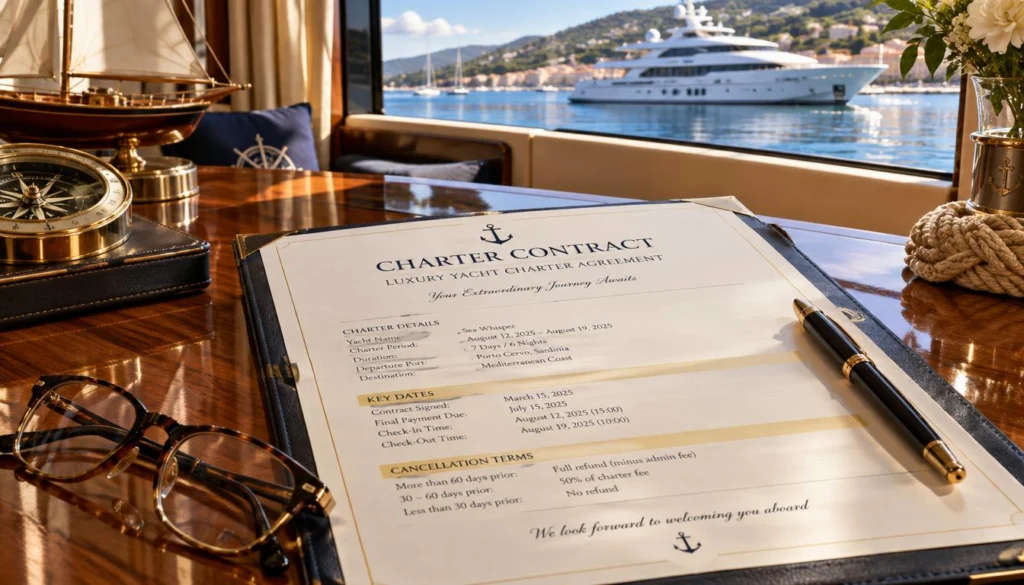
Two similar offers can differ once you compare included services, extra charges and cancellation terms. Written details matter because the charter contract controls what you receive and what happens if plans change.
Check Availability and Itinerary Flexibility
Busy travel periods call for earlier planning, while quieter dates may offer more flexibility. Confirm which itinerary details can change because of weather, port access or operating limits, and clarify who makes decisions when a planned stop is no longer practical. A proposed route should leave room for the captain to prioritize safety.
Availability can depend on the exact charter dates and the yacht’s existing commitments. When comparing options, make sure the dates, vessel and proposed itinerary refer to the same booking rather than treating a sample route as a guaranteed schedule.
Read the Charter Terms
Check the services included, APA handling, taxes and other charges, payment schedule and cancellation terms. The agreement should also reflect the agreed guest count, accessibility needs and dietary requests. If a request is important to the trip, get a clear answer about whether it can be met before committing.
Use these five questions to compare the charter offers:
- What is included in the charter fee?
- What will be charged separately?
- How are variable expenses reconciled?
- What happens if dates or itinerary plans change?
- Which guest requests can be accommodated?
Read the answers alongside the payment and cancellation clauses, not as informal promises detached from the contract. Clear terms make it easier to prepare for the trip without guessing which details are settled. With the booking in place, focus on your own preparation for embarkation.
What Should Guests Prepare Before Embarkation?
An unshared dietary request can complicate the first meal, and a missing transfer detail can leave guests waiting at the dock. Early coordination prevents avoidable disruption, while following the captain’s safety briefing is essential for everyone aboard.
Share guest needs in advance, and follow the captain’s safety instructions once aboard.
Before departure, take care of these guest preparations:
- Share dietary, allergy and accessibility needs in advance.
- Confirm arrival times, meeting points and transfer logistics.
- Pack for planned activities and local conditions.
- Check phone coverage and connectivity expectations.
- Listen to and follow the captain’s safety briefing.
Ask the operator about yacht-specific limits on luggage, footwear or water toys before departure. A compact cabin may not suit large hard-sided bags, and some decks require shoes to be removed. Do not assume that personal equipment can be brought aboard or used wherever you wish; the captain and crew can explain what is practical and safe for the trip.
Keep essential travel details accessible on arrival and tell the operator promptly if a guest’s needs change. A final check of guest requirements and travel logistics gives the crew a better chance to make the first hours aboard run smoothly.
Conclusion
The best-fit charter is the one that suits your guests and the coast they want to explore. Match the yacht and route to your group’s preferred pace, then confirm the inclusions and permitted guest count before committing. Those details help ensure the proposed experience is workable, not just appealing on paper.
As a practical next step, send a broker or operator your preferred dates, party size, route, priorities and budget range. That gives them a clear basis for proposing suitable options, with the details that matter to your group already in view.
Explore more in our superyacht charter overview covering this pillar.
Related reading: rolls royce phantom · private jet cost · luxury car brands.
How we research: EliteSoda desk-researches brand sites, auction houses, authorized dealers, and established marketplaces such as Chrono24 and major hotel/resort directories. We do not invent lab tests, prices, or quotes.
By the numbers: The industry generally treats a superyacht as a yacht of 24 m (about 79 ft) or longer, per this superyacht overview. Charter fees are usually quoted per week before extras, and an advance provisioning allowance, often 25% to 35% of the base fee, typically covers fuel, food, and port costs.
Frequently Asked Questions
What is the salary of a super yacht captain?
A super yacht captain’s compensation varies with yacht size, experience, certifications, rotation and benefits. The captain’s pay is not a fixed charter expense passed through as a standard rate. Captains may have different responsibilities and working arrangements from one vessel to another, so compensation is an employment matter rather than a predictable line item in a guest’s charter quote.
What is the 12 person yacht rule?
Twelve guests is a common limit for yachts operating under yacht-code rules, but it is not universal. Carrying more can bring passenger-vessel requirements, depending on the vessel, flag and jurisdiction. The limit concerns permitted passengers, not simply the number of beds or cabins. The operator can confirm the allowed count for the yacht and the planned operation.
How much does a superyacht charter cost?
No single rate applies to every superyacht charter. The yacht, season, destination, duration and included expenses all drive the quote. Fuel, food, taxes and variable onboard spending may be treated differently under different contracts. Compare the full breakdown, including the advance provisioning allowance and any other charges, rather than judging options by the headline rate alone.
Are superyacht charters all-inclusive?
Whether a superyacht charter is all-inclusive depends on the contract. The charter fee may not include variable expenses such as food, fuel, taxes or spending from the advance provisioning allowance. Ask which services and expenses are included, how variable costs are recorded, and how remaining funds are handled. The written terms define the arrangement.
Can a superyacht charter itinerary change during the trip?
Yes, a superyacht charter itinerary can change if weather, port access or operating limits make the planned route impractical. The captain’s safety decisions and the contract terms guide what happens. A stop may be replaced or skipped when conditions require it, so guests should treat the itinerary as a plan that may need adjustment rather than an unconditional promise.
Sources and further reading
- Boat International superyacht database
- LVMH group maisons and annual reports
- Bain & Company luxury market insights
Prices, availability and specifications change; we check brand and retailer pages before each update. See our editorial standards.