Elite Soda is reader-supported. When you buy through links on our site, we may earn an affiliate commission at no extra cost to you. Read our affiliate disclosure.
This article may contain affiliate links. See our Affiliate Disclosure. For the wider category, see our watches & jewelry guide.
The right luxury watch for men is one that suits your routine, fits your wrist, and stays within your spending limit. Intended use, comfort, budget, and upkeep matter more than chasing a single universally best choice. An automatic movement is a mechanical movement wound by the motion of the wearer’s wrist. That makes it convenient for regular wear, though it still needs care over time.
Buying confidence comes from knowing what you value before you compare models. Consider where you will wear the watch, how it feels on your wrist, and whether you are comfortable with its maintenance needs. Personal taste matters as much as any feature list: a watch you enjoy wearing is more useful than one chosen for somebody else’s ranking. Start by looking at the practical differences between common watch styles.
Key Takeaways
- Match the watch to your routine and wrist.
- Set a comfortable spending limit before comparing features.
- Factor upkeep into the decision.
- Choose a design you will want to wear often.
- Compare common styles by their practical tradeoffs.
Which Watch Style Fits Your Daily Routine?
A formal workday may suit a slim dress watch, while a casual weekend might call for a sports watch with a more robust feel. Neither choice is automatically the right everyday watch; your settings and preferences should decide.
Choose a style for how you will use it, not just for its name. A watch’s water resistance is not permission to test its limits; check the maker’s guidance for the specific watch and activity.
Choose a watch style for the way you will use it, and follow the maker’s water-resistance guidance.
| Style | Typical design | Best suited to | Tradeoff |
|---|---|---|---|
| Dress | Slim case and restrained dial | Formal settings | Less suited to rough use |
| Dive | Rotating timing bezel and water-oriented construction | Active or casual wear | Can feel bulky |
| Field | Legible dial and straightforward layout | Casual daily wear | Less formal appearance |
| Chronograph | Timing subdials and pushers | Users who want timing functions | Busier dial |
Everyday watches for men can come from any of these categories. A dress watch may work well outside formal settings, just as a dive watch can suit a desk routine if its size feels comfortable. Once you know which design fits your day, set a spending range that feels manageable.
How to Choose Luxury Watches for Men by Budget
If your ceiling is $2,500, keep that limit fixed before comparing features. That boundary helps you judge the best luxury watches for men by what you will use, rather than by a growing list of extras. Entry-level luxury watches often fall around $1,000-$3,000, mainstream luxury often falls around $3,000-$10,000, and high-end luxury often starts above $10,000. These price tiers are orientation, not hard boundaries.
Entry-Level Luxury and Starter Choices
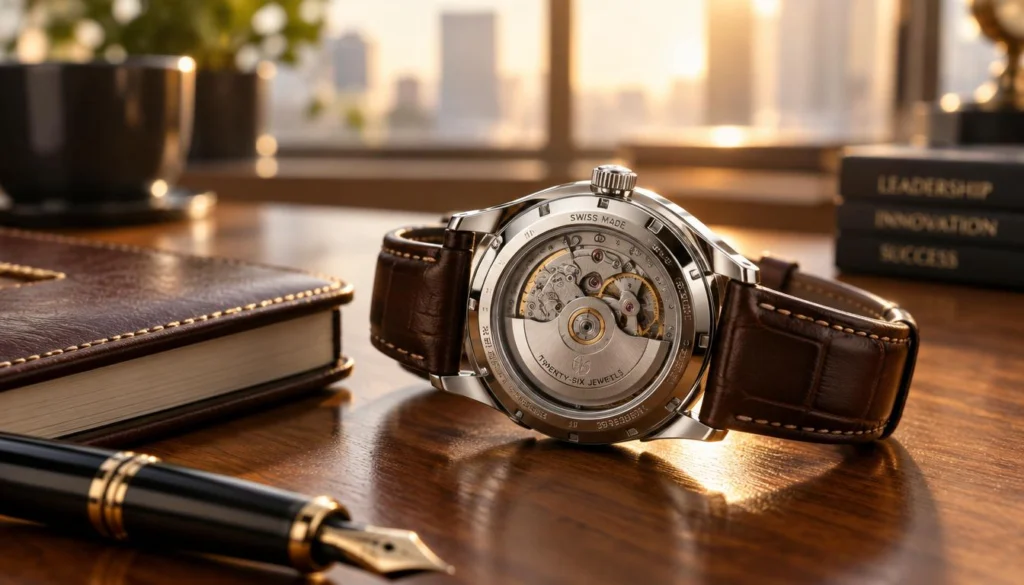
Affordable luxury watches for men can prioritize reliable construction and a design you will wear often instead of added complications. For a starter luxury watch, a clear dial, comfortable case, and useful everyday features may matter more than a display caseback or multiple timing functions. A simpler watch can also make it easier to learn which details you value before buying a more specialized piece.
Mid-Range and High-End Priorities
Moving up can bring a different material, a more complex movement, or a complication that serves a specific interest. High-end pricing may reflect those choices, but a higher price alone does not make a watch a better fit. Actual prices vary with brand, materials, movement, complications, condition, and market. Decide whether the additional feature adds value to your own use.
Before comparing models, make a short budget checklist:
- Set a firm purchase ceiling.
- Decide whether you want a new or pre-owned watch.
- Account for servicing.
- Choose the features and finish that matter most.
A first purchase often works best as a versatile watch you can wear regularly; a later purchase can address a more specific need. With a range in mind, you can compare the brands a U.S. buyer is likely to encounter.
Which Watch Brands Should U.S. Buyers Compare?
One buyer may value design and brand recognition, while another may care more about a particular function. There is no single brand that is best for every U.S. buyer, so compare the watch itself and how it suits you.
Judge each brand by the specific model, fit, and features you want. A USA price list for Rolex watches depends on the specific model and configuration, whether the watch is new or pre-owned, and the point of sale.
| Brand | Recognizable design lane | Example family | What to compare |
|---|---|---|---|
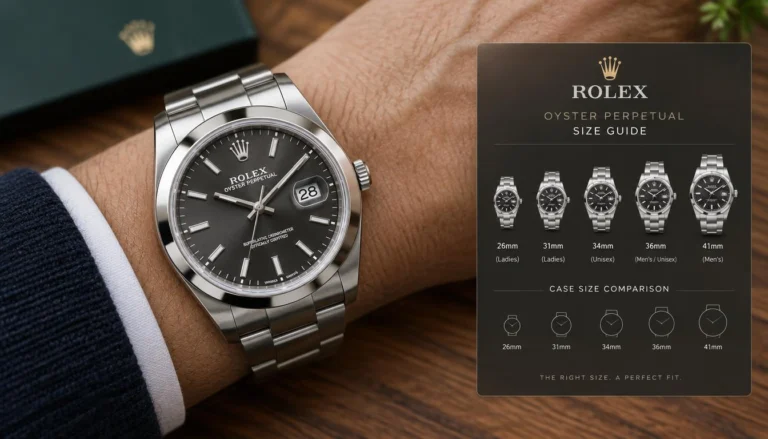
| Rolex | Sport and versatile classic designs | Submariner or Datejust | Case size and dial options |
| Omega | Sport and precision-focused designs | Seamaster or Speedmaster | Function and wrist presence |
| Cartier | Design-led dress watches | Tank | Shape and bracelet or strap |
| Tudor | Sport and tool-watch designs | Black Bay | Proportions and intended use |
Try a shortlist on your wrist where possible. Case width, thickness, and how a bracelet sits can change the impression a design makes in photographs. Brand identity is only one part of that decision; the material choice also changes a gold watch’s look and feel.
What Should You Know About Gold Watches?
A solid-gold watch uses gold as case or bracelet material, while a gold-colored finish may only create that appearance. The distinction matters because color alone does not establish what the case is made of.
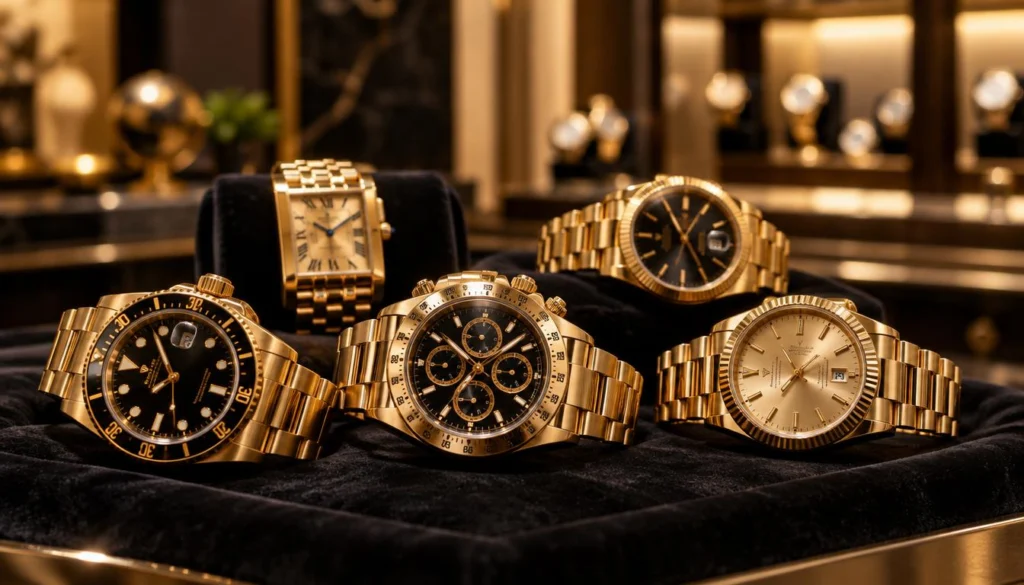
Gold-tone describes a look, and gold plating describes a layer of gold over another material. Neither phrase by itself means the watch has a solid-gold case. Check the stated case and bracelet materials rather than relying on a warm color in a product photo.
Solid Gold Cases and Bracelets
Precious-metal cases and bracelets use gold as the material, which affects their color, feel, and presence on the wrist. Gold alloys can appear in different shades, so compare the actual tone with other jewelry or accessories you wear. A solid-gold bracelet can feel noticeably weightier than a similar-looking watch with another bracelet material. Its shine may also make the watch more attention-getting, especially in a formal or bright setting.
Think about how often you will wear the piece and how comfortable you are with a more prominent look. Visible marks can draw attention on polished surfaces, and a bracelet’s weight may feel different over a full day than it does during a brief try-on. These practical details can matter as much as the shade.
Gold-Tone and Gold-Plated Finishes
Gold-tone is a description of color, not a promise about the underlying material. Gold plating applies a gold layer over another material; with wear, the surface can show changes that reveal the base beneath it. Ask for the case-material description when comparing gold watches, and distinguish gold luxury watches for men by their actual construction, not by appearance alone.
The right choice depends on the finish you like and the way you plan to wear it. With material understood, the separate decision is where and how to buy.
Where Can You Buy a Luxury Watch?
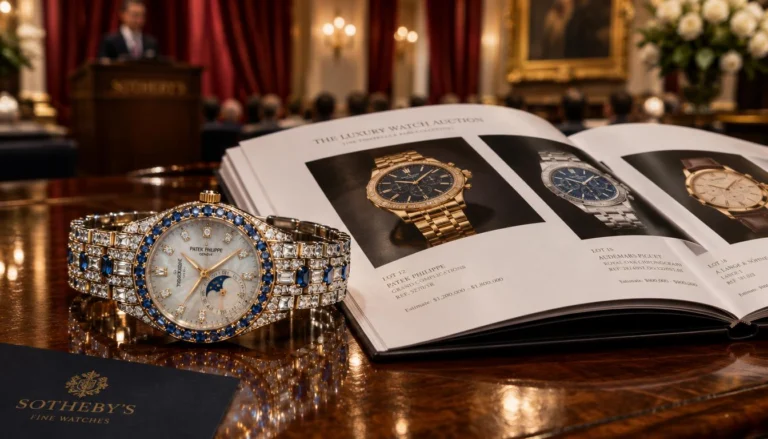
You can find watches for sale through brand boutiques, authorized dealers, established pre-owned dealers, auction houses, and online marketplaces such as Chrono24. Each channel offers a different balance of selection, support, and the work you need to do before committing.
An authorized dealer is a straightforward route for a new watch, while a pre-owned or marketplace listing calls for careful seller and watch assessment. The best fit depends on whether you value a direct brand or dealer relationship, or want to consider a broader range of listings. Terms, support, and the details of a sale can vary.
Before you purchase, check:
- Seller identity and track record.
- Written condition details.
- Return terms.
- Documentation and after-sale support.
These checks apply across watch retailers and online listings, though the available information may differ by seller. Selecting a channel is only part of the decision; next, assess the individual watch you are considering.
How Can You Evaluate a Pre-Owned Watch?
Two watches with the same model name can differ in condition, included parts, and documentation. Assess the specific watch, not just its model description, and compare its details before you commit.
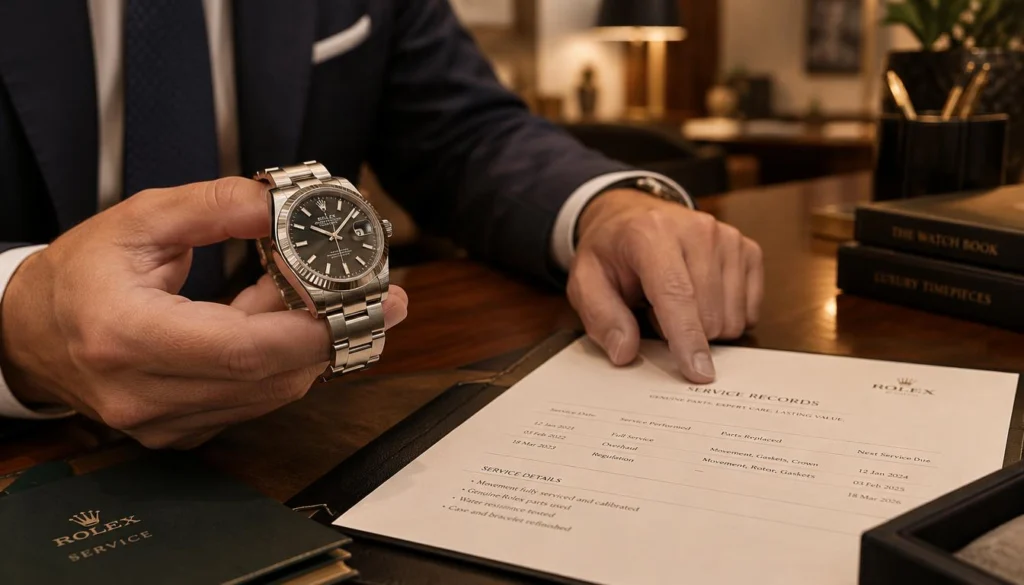
Matching the watch to its serial or reference information, paperwork, and service records can support an authenticity and provenance assessment, but paperwork alone does not prove authenticity. Look for details that agree across the watch and its documents, including the model information and any recorded servicing.
Authenticity and Provenance
Authenticity checks begin with consistency. Compare the watch’s reference and serial information with the paperwork provided, then consider whether its components and configuration make sense together. Provenance records can show how the watch has been documented or serviced over time, but gaps in a file are not proof of a problem by themselves. A set of papers should be treated as one part of the assessment, not a guarantee.
Ask what documentation is present and whether it relates to the watch being offered. Clear answers help you distinguish a complete record from paperwork that is merely included with a listing.
Condition and Service History
Inspect visible wear on the case, crystal, bracelet, clasp, and bezel. Look for replacement parts and signs of polishing, which can change the shape of edges or soften the original finish. A polished case is not automatically unsuitable, but its condition should be clear to you before purchase.
Ask whether service history is documented and what work the records describe. If the watch is costly or its condition is uncertain, have a qualified watchmaker or another suitable specialist inspect it before you commit. Once you have assessed one watch, consider the role it would fill in a small collection.
What Is the Three-Watch Rule?
The three-watch rule commonly means choosing one versatile everyday watch, one dressier watch, and one sport or activity-focused watch. It is a framework for variety, not a requirement that every collector needs three watches.
The three-watch rule is a flexible way to think about variety, not a standard every collector must follow.
Use the roles to identify what your own watch rotation lacks. Your work, hobbies, and social life may call for a different mix, and one well-chosen watch can be enough if it serves the situations you face.
- Versatile everyday watch: regular workdays and errands.
- Dressier watch: formal events or occasions that call for a refined look.
- Sport or activity-focused watch: exercise, outdoor use, or timing tasks.
The roles can overlap. A durable everyday watch might also cover casual travel, while a dressier option may suit a dinner out as well as a formal event. Choose your next piece according to the role missing from your own rotation, rather than treating three as a target.
Conclusion
Fit and intended use are stronger decision anchors than any universal ranking. A watch should feel comfortable, suit the situations in which you plan to wear it, and fit a budget you can maintain without strain.
Where possible, compare your shortlist in person and check the exact model and condition, not only the family name or listing photo. Review the seller’s written terms before purchasing. Your next step is to make a short list within a firm budget, then compare each watch with the routine it is meant to serve.
Explore more in our luxury watches for men overview covering this pillar.
Related reading: dive watch · most expensive watch · hublot.
How we research: EliteSoda desk-researches brand sites, auction houses, authorized dealers, and established marketplaces such as Chrono24 and major hotel/resort directories. We do not invent lab tests, prices, or quotes.
Do mens luxury watches differ from luxury watches for women?
Mostly in size and styling rather than quality. Mens luxury watches commonly run 38 to 42 mm, while luxury watches for women often sit between 28 and 36 mm, with more gem-set and bracelet options. Many brands now sell the same model in several sizes, so choose by wrist size and comfort, not the label.
Frequently Asked Questions
Which is the best luxury watch to buy?
There is no universal best luxury watch; prioritize fit, intended use, budget, and the upkeep you are willing to manage. A watch that suits your wrist and regular settings is often a better choice than one selected for its reputation alone. Include servicing in your decision, especially if you prefer not to plan for periodic mechanical-watch care.
What are the coolest watches for men?
Coolness is subjective, so the most appealing watch is the one whose design feels right to you. You might prefer a restrained dress watch, a bold sports design, or a distinctive case shape that stands out without relying on a complex dial. Try different proportions if you can, since a striking design in a photograph may wear differently on your wrist.
Which brand watch is best in the USA?
No single brand is best for all U.S. buyers. Compare the design and fit of specific models, the availability of authorized-dealer access that suits you, and the service needs you are prepared to manage. A well-known name does not guarantee that a particular watch will fit your wrist or your routine, so evaluate the actual model before choosing.
What are some affordable luxury watches?
Entry-level luxury watches often fall around $1,000-$3,000, a useful orientation rather than a strict boundary. The options change with brand, condition, and materials, so a pre-owned watch or a simpler design may fit one buyer’s ceiling better than another’s. Focus on construction and a design you will wear regularly instead of paying for features you do not need.
What is a good starter luxury watch?
A good starter luxury watch has a versatile, legible design that suits your wrist and routine. Look for proportions that feel comfortable and a dial you can read at a glance, then consider the movement’s service needs as part of ownership. A straightforward watch you enjoy wearing often can be a more useful first choice than a specialized model with features you rarely use.
What is the best place to buy a luxury watch?
An authorized dealer is a straightforward choice if you want to buy a new watch. For a pre-owned purchase, assess the seller’s identity and track record, written condition details, return terms, and documentation. Compare the level of support offered with the details you want before buying, and consider whether the seller can explain the watch’s condition clearly.
What watches are nice but not expensive?
“Not expensive” depends on the spending ceiling you set for yourself. Simpler designs can keep the focus on wearability, while pre-owned options may open up choices at different budgets. Compare the watch’s condition and material as well as its appearance, and avoid assuming that a familiar model or a low asking price alone makes it a good value.
Sources and further reading
- COSC: Swiss Official Chronometer Testing Institute
- LVMH group maisons and annual reports
- Bain & Company luxury market insights
Prices, availability and specifications change; we check brand and retailer pages before each update. See our editorial standards.